Click to Call
Event LED Screen Hire That Owns the Crowd
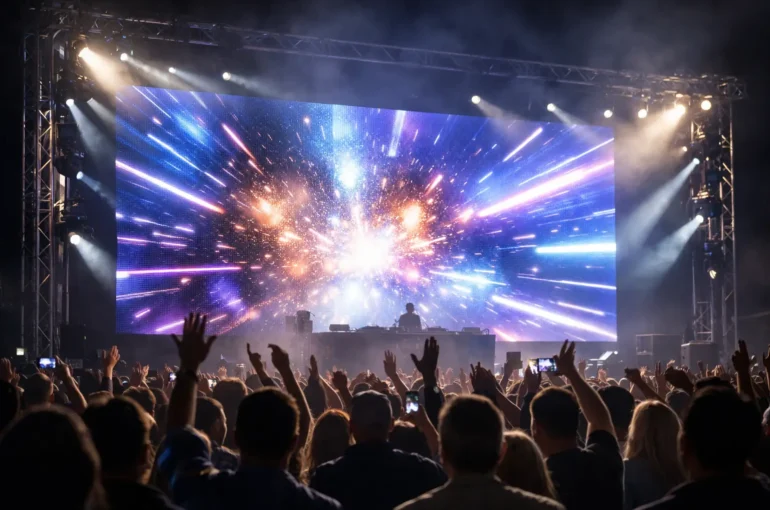
At 2:15 pm, when the gates are open, food queues are building and the headline act is still hours away, your brand has a valuable window. Event LED screen hire puts your message in the middle of that attention – large, bright and impossible to scroll past. It gives sponsors, organisers and campaign teams a practical way to own high-traffic moments without relying on a fixed billboard site.
For an event audience, visibility is not just about having a screen switched on. It is about placing the right format where people naturally gather, supplying creative that works at scale and keeping the message relevant from bump-in to final call. Get those decisions right and an event screen becomes a powerful on-site media asset, not background decoration.
Why event LED screen hire earns attention
Events bring together something most advertising channels work hard to create: a concentrated audience with time to look around. Whether it is a community festival, sporting fixture, product launch, outdoor concert, regional show or corporate activation, attendees are already engaged with the space. A well-positioned LED screen gives them a clear focal point while giving your campaign repeat exposure throughout the day.
Unlike printed signage, digital event screens can carry multiple messages. Rotate sponsor branding, promote session times, feature a competition, share event information or run a targeted call to action. That flexibility matters when schedules change, a partner needs extra exposure or a promotion needs to shift after the first rush.
The format also works beyond the venue itself. A mobile event screen can be positioned around entry points, hospitality areas, fan zones, outdoor precincts and nearby activation spaces, subject to site access and local requirements. Rather than asking audiences to find your advertising, take it to where the crowd already is.
Start with the audience, not the screen size
The biggest screen is not automatically the best buy. A screen that is too large for a compact courtyard can dominate the space without improving viewing conditions. A smaller unit may be more effective where audiences are close, dwell time is high and the message is simple. At a large outdoor event, a larger format can be the smarter choice for long viewing distances and broad crowd coverage.
Start by mapping the event flow. Where do people queue? Which areas attract repeat foot traffic? Where do guests wait between sessions, matches or performances? A screen placed near a natural pause point has more value than one placed in an empty corner simply because there was room available.
Also consider the job the screen needs to do. If it is showing live vision, entertainment content or detailed schedules, viewers need enough distance and clear sightlines. If it is mainly carrying sponsor loops and bold offers, high-footfall placement and repeated exposure may matter more than fine detail.
Mobile Outdoor Media offers Event Screen 8 and Event Screen 16 formats, giving organisers and advertisers practical options based on site scale, viewing distance and campaign objectives. The right choice comes down to the crowd, the location and the creative – not a one-size-fits-all rule.
Plan for daylight and viewing angles
Outdoor events rarely offer perfect conditions. Full sun, changing cloud cover, afternoon glare and evening lighting can all affect how content appears. Professional LED screens are designed for outdoor visibility, but the creative still needs to be built for the environment.
Avoid placing a screen where direct sunlight, structures or temporary staging will create unnecessary viewing issues. Check audience approach routes as well. People walking towards the screen see a different message than those passing across it. If the majority of attendees only have a few seconds to look, the campaign needs to communicate fast.
Make screen content work from a distance
An LED screen rewards simple, decisive creative. A detailed brochure squeezed onto a large display will not suddenly become easy to read. People at events are moving, talking and watching what is around them. Give them a message they can absorb in a glance.
Lead with one clear idea: a brand name, offer, event message, product image or action. Use high-contrast colours, large type and a limited amount of copy. If a viewer needs to stop and decode six lines of text, the opportunity has probably passed.
Video can be highly effective, particularly when it uses movement with purpose. Product shots, crowd reactions, short brand films and animated offers can hold attention. But movement should support the message, not compete with it. Fast cuts, tiny captions and overly busy graphics often look impressive in an edit suite but lose impact on a busy event site.
A useful rule is to treat each creative frame as though it will be seen for only three seconds. Can someone understand the brand and the main point from that distance? If not, simplify it.
Build a loop with a reason to watch
A rotating content loop lets multiple sponsors or messages share the screen, but every addition affects frequency. If ten advertisements run in a long loop, each advertiser receives less repeat exposure than they would in a tighter rotation. That is not always a problem, particularly for an event with several commercial partners, but it needs to be clear before bookings and creative are finalised.
Keep the loop purposeful. Mix sponsor content with useful event information, event branding and timely prompts. A competition announcement before a major performance, a hospitality offer near lunch or a post-event retail message can feel more relevant than the same generic ad repeated all day.
For sponsor-funded events, screen inventory can also create a valuable commercial package. Premium placement, stronger share of voice, category exclusivity or scheduled takeover moments give partners something tangible beyond a logo on a banner.
Lock in site logistics early
Great event media depends on practical planning. Before confirming event LED screen hire, establish where the unit will sit, when it can access the site and how it will be protected within the broader event layout. Access paths, ground conditions, safety clearances, crowd barriers and bump-in timing all influence what is possible.
Outdoor spaces can be unpredictable. A grassed area may become soft after rain. A busy precinct may have restricted vehicle access. A venue may require approvals, inductions or specific operating times. None of these factors rule out a screen deployment, but they should be addressed before the event week, not during a hectic bump-in.
Power requirements are another key conversation. Depending on the screen format and site, a suitable power source or an alternative operating arrangement may be needed. Confirm the available infrastructure, cable routes and responsibilities early so the event remains safe, tidy and ready for attendees.
If you are running a multi-city activation or touring promotion, consistency becomes even more important. Use a central campaign plan, standardised creative and clear local site notes, while allowing each event location to respond to its own traffic patterns and venue conditions.
Measure more than impressions
An event screen is designed to be seen, but the strongest campaigns give people a next step. That might be visiting an activation, entering a competition, scanning a QR code, using a promotional code, visiting a nearby retailer or following an event announcement.
Choose one action that matches the audience and setting. A QR code can work well where people are waiting or seated, provided it is large enough and remains on screen long enough to scan. For a moving crowd, a short web address, memorable offer or clear direction to a nearby stand may produce better results.
Campaign measurement can combine attendance figures, estimated foot traffic, screen operating hours, creative rotation records, competition entries, offer redemptions and on-site sales activity. It depends on the event objective. A national brand building awareness will assess success differently from a local venue trying to fill tables that afternoon.
The point is to set the measure before the screen goes live. If the goal is sponsor value, agree on the screen schedule and visibility deliverables. If the goal is leads, make sure the call to action and data capture process are ready before the crowd arrives.
Treat the screen as part of the event experience
The most effective event screens do not feel bolted on at the last minute. They support the atmosphere, guide the audience and give commercial partners a visible role in the experience. That may mean countdowns before a performance, live social content with moderation, match updates, crowd prompts or scheduled sponsor moments that suit the run sheet.
There is a balance to strike. Too much advertising can make an event feel cluttered. Too little commercial presence can leave sponsorship value on the table. Build a programme that serves attendees first, then place brand messages within that attention in a way that feels clear and confident.
When your next crowd gathers, do not leave the best viewing space empty. Put a bright, well-planned message where people are already looking, and give them a reason to remember it after they leave.
Related reading: Event Screen Hire Australia: The 2026 Guide
We hire both 8sqm and 16sqm screens. Ask us which suits your event.