Click to Call
Top Alternatives to Static Billboards in Australia
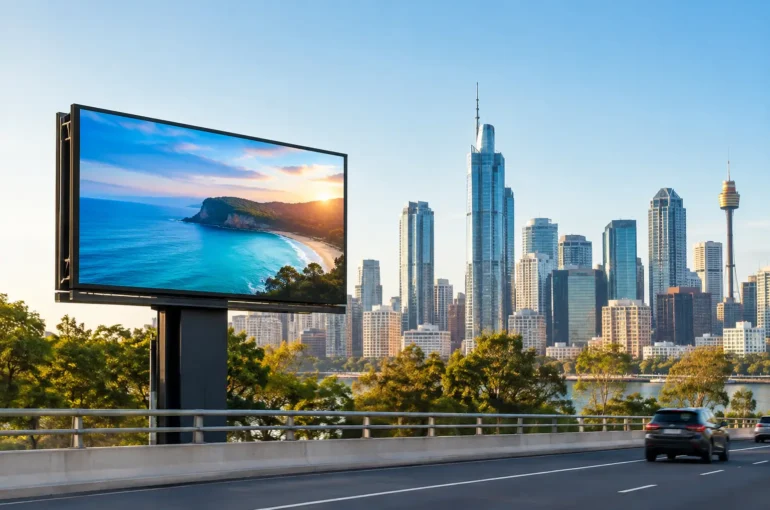
A fixed billboard can be hard to miss, but it cannot follow the crowd. When the foot traffic shifts to a stadium, shopping precinct, festival, transport hub or new development, the sign stays where it is. That is why the top alternatives to static billboards give Australian advertisers a stronger option: put the message in the places people are already moving, gathering and buying.
For a retail launch, property release, major event or multi-city promotion, flexibility is more than a nice extra. It is the difference between paying for a postcode and owning the moments that matter within it. The right format depends on your audience, your creative and how much control you need over timing and location.
Why look beyond a fixed billboard?
Static sites still have a place in a broad awareness plan. They can deliver long-term presence on a well-trafficked road and work when a campaign needs the same message in one familiar location for months. The trade-off is simple: the audience must come to the board.
Mobile and event-based outdoor advertising reverse that equation. They take your campaign to busy retail strips, commuter routes, nightlife precincts, venue approaches and community events. A planned route can concentrate exposure around key suburbs, while an event deployment can place a large-format message directly in front of a relevant crowd.
This also gives campaign managers more room to respond. If weather, a competitor activation, a sold-out event or a local opportunity changes the plan, mobile formats can often be redirected. That agility is particularly valuable when fixed-site availability is limited, expensive or spread across multiple suppliers.
Top alternatives to static billboards for active campaigns
Digital mobile billboards
Digital mobile billboards combine street-level movement with bright, changeable creative. A truck-mounted LED screen can run through high-traffic areas, circle a venue before doors open, or work a targeted route near retail centres and transport corridors.
This format suits campaigns that need more than one message. Promote different products by time of day, switch creative between suburbs, count down to a sale, or run a sequence that builds anticipation. For agencies managing several advertisers or brands with a full creative suite, the ability to rotate content can make one vehicle work harder.
The main consideration is creative discipline. Digital screens reward short, high-contrast messages that can be understood in seconds. Treat the screen like a moving headline, not a brochure. Large type, clear branding and one decisive call to action will outperform a crowded layout every time.
Conventional mobile billboards
A conventional mobile billboard delivers the visual impact of a large printed display with the same route flexibility. It is a strong choice when your campaign has one powerful creative concept, such as a new store opening, a property development, a product launch or a local service offer.
Printed mobile billboards can provide excellent scale and repetition without requiring digital artwork variations. They work especially well when a brand needs to dominate a defined area over several days, from morning commuter traffic through to evening dining and entertainment precincts.
Compared with digital mobile media, the message cannot change during the run. In return, you get a clean, bold canvas and a straightforward production approach. If the campaign has one clear promise, that is often exactly what it needs.
Relocatable billboards
Relocatable billboards are built for location ownership where a permanent roadside structure is not the answer. They can be positioned on suitable private land near busy roads, retail approaches, development sites, industrial areas or growing suburban corridors.
For property developers, land sales teams and businesses opening in emerging precincts, this can be a smarter alternative to buying a standard fixed billboard site. The display remains highly visible in the local area, yet can be moved as the sales focus, construction stage or audience catchment changes.
Placement conditions matter. Access, sightlines, local requirements and landholder approval all need to be assessed before a campaign proceeds. When the site is right, a relocatable format gives advertisers a prominent local presence without being locked into the usual outdoor inventory.
Solar ad trailers
Solar ad trailers bring a practical, lower-infrastructure option to roadside promotions, retail activity and regional campaigns. They are designed to be deployed where attention is concentrated, including event perimeters, car parks, community hubs and selected roadside locations.
Their strength is duration and placement. Rather than passing through an area, a trailer can hold position where people repeatedly see it. That makes it useful for multi-day events, seasonal promotions, development sales displays and campaigns supporting a specific venue or precinct.
Like relocatable boards, this is not a set-and-forget exercise. A good deployment starts with the question: where will the audience slow down, park, queue or pass repeatedly? Put the screen or display there, and give it a message that is visible from the approach.
Event screens for crowds that are already engaged
An event audience has made a decision to be somewhere. They are attending a match, festival, community day, trade event or outdoor activation, often spending hours in the same environment. Event Screen 8 and Event Screen 16 formats give brands a way to meet that attention with substantial digital visibility.
These screens can carry sponsor messages, schedules, live content, promotions and branded visuals while contributing to the event experience. For organisers, they can add functional value as well as advertising inventory. For sponsors and exhibitors, they create a more credible presence than a small sign placed at the edge of the site.
Scale should match the setting. A larger screen earns its place where viewing distances are longer and crowd numbers are high. A more compact unit can be the better fit for local activations, sporting clubs, school events or contained spaces where people are close to the display.
Digital bike boards, bike boards and walking boards
Not every campaign needs a truck or a large screen. In dense pedestrian areas, narrow shopping strips, markets and event entrances, human-powered formats can put a message directly into the flow of foot traffic.
Digital bike boards suit brands with time-sensitive offers or rotating content. Printed bike boards and walking boards work well for direct local announcements, sampling activity, street-team campaigns and directional promotions. They are visible at eye level and can reach places that larger vehicles cannot.
The trade-off is scale. These formats do not replace a large roadside display for broad commuter reach. They do create close-range frequency in areas where people are walking, browsing and making decisions. For hospitality venues, retail tenants, entertainment promoters and local campaigns, that can be the point.
How to choose the right static billboard alternative
Start with the audience moment, not the format. If you need commuters, plan routes around commuter times and traffic corridors. If you need shoppers, work the retail precincts. If you need ticket buyers, focus on venue approaches, entertainment districts and the days leading into the event.
Next, decide whether the message needs to change. Digital mobile billboards and event screens suit campaigns with multiple offers, countdowns or daypart messaging. Printed mobile formats, trailers and relocatable boards are often more efficient when one creative idea can carry the campaign.
Then consider how long you need to own the location. A mobile billboard builds reach across several areas. A solar trailer or relocatable billboard can build repeat visibility in one selected place. Event screens concentrate impact around a defined date and audience. The best plans frequently combine these strengths rather than asking one format to do every job.
For national campaigns, consistency matters as much as flexibility. Keep the campaign idea recognisable across Brisbane, Sydney, Melbourne, Perth, Adelaide and regional markets, then tailor routes, deployment times and event locations to local behaviour. Mobile Outdoor Media can coordinate that mix through one national campaign approach, reducing the work of sourcing separate operators city by city.
Make the creative work in the street
Outdoor advertising is consumed quickly. A person in a car, on a bus or walking through a crowded precinct will not stop to decode a complicated message. Lead with the brand, use a short offer or proposition, and make the next action obvious.
Design for the real environment, not just a screen in the office. Check viewing distance, contrast, type size and how the message reads in daylight, traffic and surrounding visual clutter. For digital creative, use movement with purpose. A subtle transition or changing offer can attract attention, but constant animation can make the message harder to absorb.
Before committing, map the campaign around the decisions you want to influence. Put a mobile billboard near the audience, position a trailer where exposure repeats, or place an event screen where your brand becomes part of the occasion. The street is not static, and your advertising does not need to be either.
Related reading: Static vs Digital Mobile Billboards: The 2026 Guide
Want help choosing the right format for your next run? Book your campaign.