Click to Call
Digital Screens vs Static Signs for Street Reach
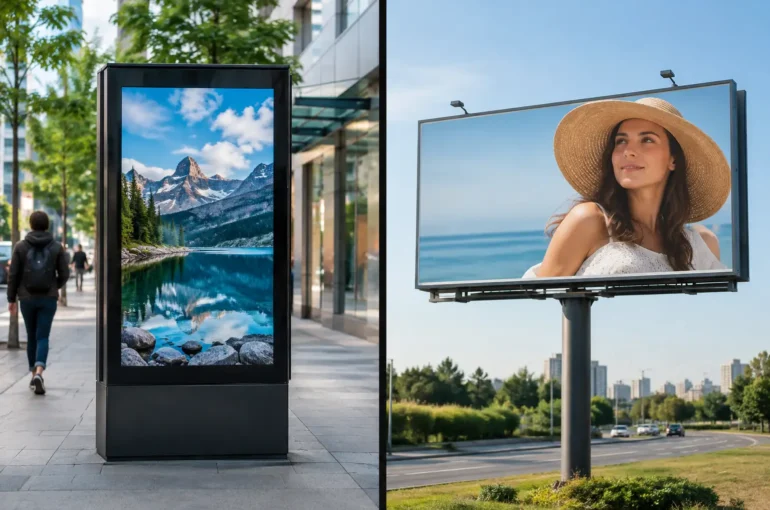
A crowded shopping strip at 5 pm gives advertisers only seconds to earn attention. That is where the choice between digital screens vs static signs becomes practical, not theoretical. One format can rotate a new offer before tomorrow’s lunch rush. The other can hold a single, high-impact message in the same place for weeks.
Both can put a brand in front of real people in real places. The stronger choice depends on what you need the campaign to do: build recognition, promote a time-sensitive offer, dominate an event precinct, support a launch or reach several markets without rebuilding the plan at every stop.
Digital screens vs static signs: the real difference
Static signs show one creative message for the duration of the booking. Think conventional mobile billboards, fixed panels, bike boards or walking boards. Their strength is simple: a clear message stays visible, building familiarity through repeated exposure.
Digital screens display changing content through an LED screen. A digital mobile billboard or event screen can run multiple messages, daypart creative and campaign updates without reprinting the display. It gives advertisers more control once the campaign is live.
The question is not whether digital is automatically better than static. It is whether flexibility or message consistency will produce the better result for your campaign.
A property developer promoting a single estate release may benefit from a large, static creative with a suburb name, visual and clear call to action. A hospitality group advertising lunch, after-work drinks and weekend entertainment may get more value from digital creative that changes with the clock. Both formats can work hard. The campaign objective should decide.
When digital screens take the lead
Digital screens are built for campaigns that need to move quickly. If your offer changes, your campaign can change with it. That matters when stock levels, ticket availability, weather, event schedules or daily trading conditions affect the message.
Fast creative changes without print delays
With static signage, a new message means new artwork, printing and installation. That process is worthwhile when the message is set, but it is not designed for frequent changes.
Digital gives campaign teams room to respond. Run a launch message in the morning, a limited-time offer in the afternoon and an event reminder in the evening. A retailer can promote a specific store opening. An event organiser can update session times. A national brand can tailor creative to the city or location where the screen is operating.
This is especially useful for mobile outdoor campaigns. A screen can travel through busy retail areas, transport corridors, entertainment precincts and event approaches while carrying creative suited to the time and audience around it.
More than one message in a single booking
Digital inventory can support a creative sequence rather than forcing every campaign point into one frame. That lets you run brand-led messaging alongside product benefits, offers and calls to action.
There is a trade-off. More messages do not always mean more impact. If every frame has a different visual style or a competing call to action, the audience may remember none of them. Keep the campaign recognisable. Use a consistent colour palette, headline style and brand device, then let the digital format add relevance rather than confusion.
Stronger fit for live environments
Event screens earn their place where audiences are gathered and waiting: sporting events, festivals, community activations, product launches and outdoor functions. Digital content can provide a branded backdrop, promote the next activity or carry sponsor messages that feel current to the occasion.
For an event campaign, screen size matters as much as the technology. A compact display may suit close foot traffic, while a larger event screen is designed to command attention across an open space. Plan for viewing distance, crowd movement, daylight and the position of entrances, queues and main activity areas.
Where static signs still win
Static signage is not the old option. It is often the sharper option when the campaign needs a message people can absorb instantly and see repeatedly.
One message, repeated properly
A static billboard does not rotate away. Its value comes from repetition and visual certainty. People passing the same route see the same branding, headline and offer again. That repeated exposure can be highly effective for a campaign with a clear message: a new store opening, a local service, a major sale, a development launch or a simple brand awareness push.
For businesses working with a tight creative budget, static can also make commercial sense. Put the investment into one exceptional design, use fewer words, and give the audience enough time to register it. A strong static execution does not need moving elements to get noticed.
Reliable readability at a glance
Outdoor advertising is read in motion. Drivers, passengers and pedestrians are not studying a page. They are catching a message between traffic lights, on the footpath, outside a venue or across a car park.
Static signs keep the entire message present at all times. That can make them easier to understand when the campaign includes a short web address, suburb name, phone number or specific offer. Digital screens can carry this information too, but each frame still needs to work independently. Never rely on an audience seeing the next slide.
Tangible scale for street-level campaigns
Conventional mobile billboards, bike boards and walking boards bring static creative directly into active public spaces. They can deliver a high-frequency local presence around retail centres, business districts, transport hubs and event venues.
This format suits campaigns that want to own a targeted area with one unmistakable message. A single branded ute moving through a defined route can create the sense that a business is present, active and hard to miss.
Compare the costs beyond the booking rate
The cheapest booking is not always the best value. Compare digital screens vs static signs by looking at the work required before and during the campaign.
Static campaigns usually involve design, printing and production costs. If the creative remains unchanged for a longer period, that investment can be spread across the booking. For a stable campaign, this is straightforward and cost-effective.
Digital campaigns may reduce print requirements and make mid-campaign changes easier, but they need well-prepared screen artwork. Content needs to be legible, correctly timed and designed for the screen dimensions. If you are running multiple assets, allow enough production time to get every frame right.
Then consider the operational value. A campaign that needs to react to event schedules or rotate several offers may save time and reduce waste with digital. A campaign with one proven message may gain more by investing in static scale and sustained exposure.
Choose the format around the job
Start with the audience and the moment you want to own. If the goal is broad local awareness around a new location, static mobile signage can keep one memorable message in circulation. If the goal is to promote changing offers across several busy precincts, digital can give your team the agility to stay relevant.
Location also changes the answer. A high-traffic commuter route may reward a short, bold static message. A festival site, CBD activation or hospitality precinct can create more opportunity for digital content that adapts through the day. For multi-city activity, use a coordinated plan that keeps the brand consistent while allowing local dates, places and offers to change.
Do not overlook creative discipline. Whether the screen moves or the message stays still, the audience must understand the key point in seconds. Lead with the brand. Use one clear benefit. Make the call to action practical. Save the small print for places where people have time to read it.
Build for attention, not technology
Digital screens and static signs are both powerful outdoor tools when matched to a clear campaign plan. Digital brings speed, motion and message flexibility. Static brings constant visibility, creative focus and repeat recognition.
The best campaign may use both. Run a static mobile billboard to establish a strong visual presence around a target area, then use digital mobile screens near key trading periods or event moments to push timely offers. Mobile Outdoor Media can help shape the format, route and display plan around the places your audience is already moving through.
Start with the message you need people to remember when they look away. Then put that message where the street cannot ignore it.