Click to Call

How to Choose Event Screens That Get Seen
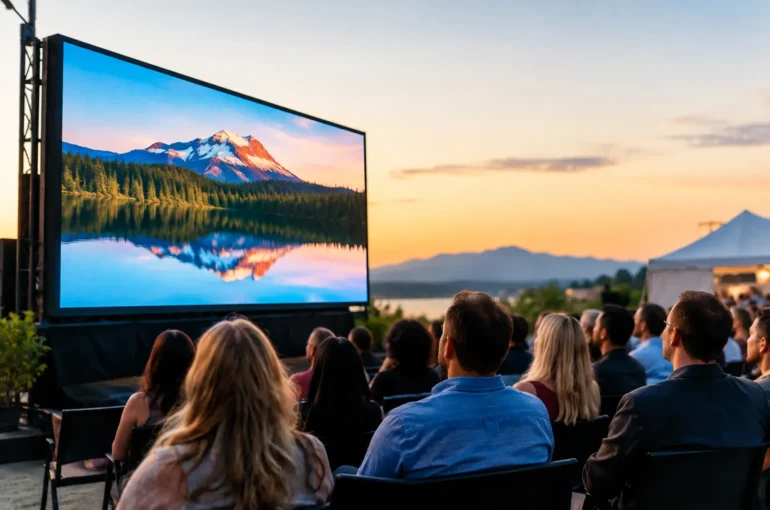
A screen can be large, bright and technically impressive, yet still miss the people you need to reach. Knowing how to choose event screens starts with one practical question: where will the crowd actually look, pause and move? Get that right first, and your screen becomes a high-impact campaign asset rather than expensive background scenery.
For brand activations, sporting fixtures, community events, festivals and outdoor promotions, the best screen is the one that puts your message in the audience’s natural line of sight. Size matters, but location, content and operating conditions matter just as much.
How to choose event screens for the venue
Start with the site, not the screen. Walk the event footprint or review a detailed site plan before selecting a format. Identify entry points, queues, food and beverage areas, main stages, seating zones, thoroughfares and any place where people naturally stop.
A screen positioned near an entry can make an immediate first impression and set the tone for the event. A screen near a bar, activation zone or queue has more time to land a message because audiences are stationary. A screen facing a fast-moving pedestrian route needs bolder creative, fewer words and a message that can be understood in seconds.
Also consider viewing distance. A screen that looks enormous from five metres away may be too small to carry impact across an oval, a busy public square or a large festival field. Conversely, placing an oversized screen beside a compact stand can overwhelm the space and leave audiences too close to take in the full message comfortably.
Event Screen 8 and Event Screen 16 formats can suit different footprints and crowd volumes. The right choice depends on the scale of the site, the available placement area and how far away your key audience will be. Match screen size to the real viewing environment, not simply the biggest unit available.
Check sightlines before you commit
Crowd flow is only part of the picture. Trees, marquees, staging, fencing, food vans, parked vehicles, flags and other event infrastructure can block visibility. Screen placement also needs to work alongside emergency access, pedestrian routes and venue rules.
Ask for the screen position to be assessed from the audience perspective. Stand where attendees will stand. Approach from each main route. Check the view from seated areas if applicable. This simple exercise often reveals whether a screen needs to be moved just a few metres to gain significantly more exposure.
Match screen brightness to the conditions
Outdoor events demand screens that can compete with daylight. A display that performs well in a covered venue may lose definition in direct sun, particularly during the middle of the day. For daytime campaigns, prioritise an outdoor-capable LED screen with enough brightness and contrast to keep colours strong and text readable.
But more brightness is not automatically better. At dusk or during night events, an overly bright display can be uncomfortable for nearby audiences and distracting for drivers if the screen is positioned close to roads. Good screen operators adjust output to suit changing light conditions, venue requirements and safe operation.
Weather also affects the decision. Australia’s events can involve strong sun, sudden rain, wind and coastal conditions. Confirm that the screen format is designed for outdoor deployment and that the supplier has a clear plan for setup, stability, power, cabling and wet-weather operation. If the event is in a regional location or temporary precinct, mobile and self-contained options can make deployment far more practical.
Decide what the screen needs to do
Event screens can do more than run an ad loop. They can welcome attendees, promote sponsors, display live social content, show event schedules, support announcements, carry directional information or amplify footage from a stage. Each use has different technical and creative requirements.
If your objective is sponsor recognition, repeated short placements with a clean logo and one campaign message may deliver the strongest result. If you are promoting a time-sensitive offer, use clear timing, location details and a simple call to action. If the screen supports live programming, make sure the production plan accounts for feeds, playback, switching and an operator who can respond quickly on site.
Be realistic about how long people will watch. Most audiences will not stop to read a detailed sales pitch. Build creative for the moment: a strong visual, a short headline, recognisable branding and one action. QR codes can work when people have time to scan them, such as in queueing areas or hospitality zones, but they are less useful on a screen viewed from a distance or while people are walking.
Design for the screen, not for a brochure
Screen advertising is not print artwork enlarged. Fine type, dense legal copy, small logos and low-contrast imagery lose impact outdoors. Use large type, high-contrast colours and simple compositions. Keep important information away from the outer edges, where viewing angles or screen framing may reduce clarity.
Animation can attract attention, but it should support the message rather than compete with it. Fast cuts and constant movement may look energetic from close range yet become visual noise across a busy event. Give the audience a clear focal point and enough time to absorb it.
Request the artwork specifications early. Correct dimensions, file formats and lead times prevent last-minute revisions and help ensure your campaign looks sharp from the first attendee through to the final crowd exit.
Factor in power, access and event timing
A great position is useless if the screen cannot safely access the site or operate for the required hours. Event organisers should map vehicle access, bump-in windows, ground conditions, power availability and bump-out restrictions before confirming placement.
Mobile event screens can reduce the complexity of building a temporary display structure, especially where access windows are tight or the event moves between locations. However, every site is different. Soft ground, narrow gates, underground car parks, heritage venues and restricted loading zones can affect what is possible.
Timing matters as much as placement. Consider when the crowd arrives, when it is largest and when people leave. A screen used only during the headline act may miss early-arriving families, while a screen running throughout a full-day event can build repeated exposure and reinforce sponsor presence. If your campaign has several messages, schedule them around the event program rather than treating every hour the same.
Choose a supplier that can execute on site
Event media is operational. You need more than a screen on a quote. Look for a supplier that understands venue coordination, local conditions, artwork requirements, delivery timing and on-site support.
For campaigns across multiple cities, consistency is critical. The screen format, creative quality, reporting process and event-day coordination should hold up whether the activation is in Brisbane, Sydney, Melbourne, Perth or a regional centre. Central coordination paired with local delivery helps keep the campaign moving without forcing your team to manage separate providers in every market.
Ask direct questions before booking: Who handles site liaison? What access does the unit require? How is content supplied and checked? What is the wet-weather process? Can the schedule be updated during the event? What happens if conditions change? Clear answers protect your budget and your event timeline.
Build the screen into the wider campaign
An event screen delivers its strongest value when it works with the rest of your outdoor activity. Use it to reinforce mobile billboard routes near the venue, point audiences towards an activation, support a sponsor offer or keep a campaign visible before and after the main event window.
That combination turns one placement into repeated real-world exposure. People may see your message approaching the precinct, encounter it again on the event screen, then notice it on surrounding streets as they leave. Repetition builds recall, particularly when the creative stays consistent.
Do not choose event screens by specifications alone. Choose them by the attention they can earn in a particular place, at a particular time, from a particular crowd. When the screen, site and creative are planned together, it becomes a visible part of the event experience – and a harder-working part of your campaign. Mobile Outdoor Media can help put that plan into motion where your audience is already gathered.