Click to Call

Brand Roadshows That Put Your Message on the Map
A crowded event precinct, a busy retail strip or a packed game-day approach is not the place for a campaign that waits quietly to be noticed. Brand roadshows put the message in front of people while they are already out, moving, shopping, queuing and talking. Done well, they turn a single activation into a visible campaign that earns attention beyond the event footprint.
For businesses, agencies and event teams, the advantage is simple: take the brand to the audience instead of relying on the audience to find it. Mobile displays, digital screens and on-ground promotional formats can build momentum before an event, dominate the key moments and extend the message into surrounding streets and suburbs.
What Brand Roadshows Need to Deliver
A roadshow is more than a branded vehicle parked outside a venue. It is a planned sequence of public-facing moments, built around the places and times your audience is most likely to see, remember and respond to the campaign.
The strongest roadshows do three things. They create instant visibility with large, clear creative. They repeat that visibility across a route, event schedule or targeted area. And they give people a reason to act, whether that means visiting a store, scanning a QR code, attending a launch, trialling a product or simply remembering the brand when it matters.
That repeat exposure is where mobile outdoor media earns its place. One sighting can spark interest. Multiple sightings near shopping centres, transport corridors, venues and local hotspots make the campaign feel present. Your message stops being another ad in a feed and becomes part of the street-level environment.
Start With the Audience, Not the Vehicle
The question is not, “What can we put on the road?” Start with, “Who needs to see this, and where are they already going?” A national product launch may need coordinated activity in several capital cities. A new hospitality venue may benefit more from concentrated visibility within a tight local radius. A property development campaign may need frequent exposure along commuter routes and near display suites.
Set the campaign objective before selecting the format. If the aim is broad awareness, prioritise high-traffic routes and repeated circulation. If you need foot traffic at a specific event or retail location, concentrate the roadshow around access points, nearby streets and peak arrival times. If the campaign depends on explanation, an event screen or staffed activation can do more work than a passing billboard alone.
Timing matters just as much as geography. Think about when the audience is in the right frame of mind. Morning commuter activity suits sharp, simple awareness messaging. Weekend retail zones suit offers and product launches. Entertainment precincts come alive before and after headline events. A good route plan follows real movement patterns, not just a map with busy roads highlighted.
Build a Route With Purpose
Avoid treating a route as a long drive between random locations. Every stop and every kilometre should support the campaign.
For a one-day launch, a roadshow might begin near commuter hubs, move through commercial areas at lunchtime, then finish in a high-footfall retail or entertainment district. For a multi-day event, the better plan may include pre-event promotion in surrounding suburbs, strong venue coverage during the main program and follow-up visibility near transport links as crowds leave.
Local knowledge makes a difference here. Roadworks, school zones, sporting fixtures, market days and weather can all change how people move through an area. Build enough flexibility into the schedule to respond when conditions change.
Match the Format to the Job
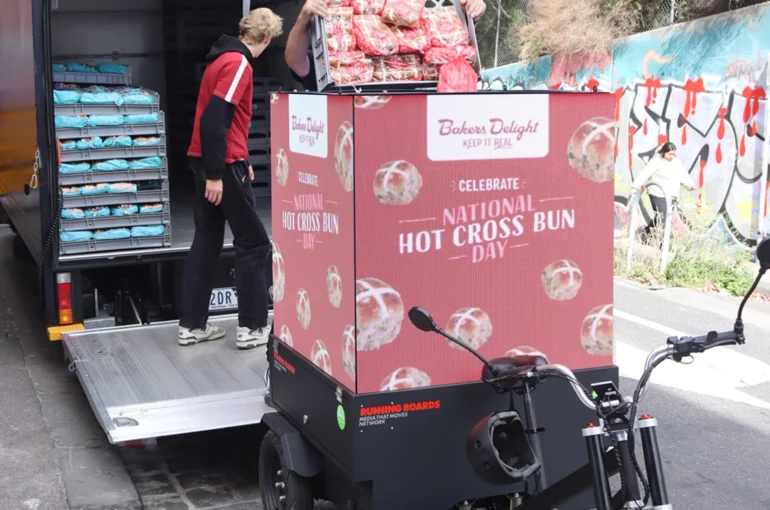
A roadshow should use the media format that best fits the audience, environment and message. Bigger is not automatically better. A large mobile billboard can own a busy arterial road, while bike boards or walking boards can get closer to pedestrian audiences in places where vehicles cannot operate effectively.
Digital mobile billboards are a strong option when the message needs to change by location, time or audience. A campaign can run different creative near separate retail centres, promote a specific event session or switch from awareness to a direct call to action as the day progresses. They are also useful when several creative panels need to be shown without overloading one design.
Conventional mobile billboards suit campaigns that need bold, sustained visibility with a single clear message. They work well for major offers, openings, entertainment promotions and brand-building campaigns where repetition is the goal.
For event-based activity, screens create a natural focal point. An Event Screen can support live content, sponsor messaging, schedules, results, social content or product demonstrations. Pair that with mobile billboards circulating nearby and the campaign reaches both people inside the event environment and the wider public around it.
Consider these formats when planning the mix:
- Digital mobile billboards for adaptable creative and time-sensitive offers.
- Conventional mobile billboards for high-impact, repeated route coverage.
- Event screens for crowd-facing content and venue activation.
- Bike boards and walking boards for close-range engagement in pedestrian areas.
- Solar ad trailers and relocatable billboards for sustained visibility at fixed campaign locations.
The right mix depends on the job. A festival sponsor may need screens and pedestrian formats. A retailer opening in multiple locations may need mobile digital billboards across each market. A regional campaign may need a relocatable display near a key site, supported by mobile reach on local roads.
Keep the Creative Fast and Unmissable
Roadshow creative has seconds to work. People may see it from a car, through a bus window, while crossing the road or in the middle of an event crowd. That is not the place for a paragraph of copy, a crowded product range or an overly clever message that needs explaining.
Lead with one idea. Use a strong headline, a recognisable brand element and a clear action where relevant. If there is an offer, make it easy to grasp. If there is a date, venue or location, make it large enough to read at a glance. If a QR code is essential, use it where people have time and proximity to scan it, such as an event screen, trailer or static roadside position.
Digital creative should be designed for movement too. Short loops, high contrast and simple animation hold attention better than busy video footage. Build several concise frames rather than putting every campaign message into one rotation.
Make the Roadshow Feel Like a Campaign
The most effective brand roadshows do not operate in isolation. They reinforce activity happening elsewhere, including radio, social, retail, PR, sponsorship, direct mail or local partnerships. The roadshow supplies the public proof that the campaign is live and active in the real world.
Use consistent colours, wording and offer details across every channel. If people see the message online and then spot it on the street, the campaign gains familiarity quickly. If the creative changes too much from one format to another, you lose the benefit of that recognition.
There is also a practical trade-off between reach and depth. A broad route can deliver more total exposure, while a tightly targeted roadshow can create stronger local ownership. Neither is automatically right. A national brand entering a new market may need reach first. A business promoting a local opening often gets better value by showing up repeatedly within the immediate trade area.
Plan for Operations Before Launch Day
Great concepts can lose impact through avoidable operational issues. Confirm artwork specifications early, particularly for digital formats and large-scale event screens. Allow time for production, approvals, route scheduling and any venue requirements. For campaigns involving staff, sampling or demonstrations, make sure the brand team knows exactly where they need to be, what they need to say and how leads will be captured.
Weather is another factor. Outdoor activity needs a plan for heat, rain and changing crowd behaviour. Mobile formats provide useful flexibility, but the campaign still needs clear decision-making around delays, route changes and event contingencies.
For multi-city activity, central coordination is essential. Mobile Outdoor Media can help keep campaign delivery consistent while local operators manage the details that matter in each market. That means less time chasing separate suppliers and more control over the campaign as a whole.
Measure More Than the Crowd
Foot traffic and audience estimates matter, but they do not tell the whole story. Measure the outcome that matches the objective. For a retail campaign, track store visits, offer redemptions and location-specific sales. For an event activation, look at attendance, scans, sign-ups and engagement. For a brand campaign, compare search activity, website visits, social mentions or uplift in local awareness during the roadshow period.
Use unique QR codes, campaign landing pages, offer codes or market-specific creative to make attribution clearer. A roadshow rarely works as a single isolated touchpoint, so measurement should account for its role in building recognition and prompting later action.
The best roadshows are not the ones that simply travel the furthest. They are the ones that appear in the right places often enough to become impossible to ignore. Put a clear message on the move, give it a smart route and let the street do what static advertising cannot: bring your brand directly into the public conversation.