Click to Call
LED Displays That Put Your Campaign in View
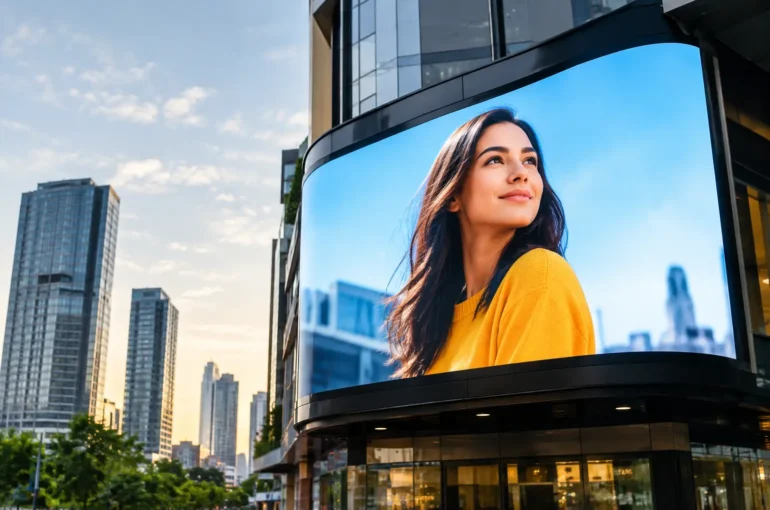
A static sign has one chance to be noticed. LED displays give your campaign the power to earn attention again and again – with movement, colour, changing offers and messaging that meets people where they are already shopping, commuting, queuing or attending an event.
For Australian brands competing for attention in busy public spaces, that difference matters. A well-planned digital screen campaign can put a launch, promotion or local message in front of high-value audiences at the moment it is most relevant. The result is not just visibility. It is repeated, memorable exposure in the real world.
Why LED displays command attention outdoors
People are conditioned to ignore familiar advertising. The same roadside billboard, shopfront poster or banner can become part of the background within days. Digital screens interrupt that pattern because the creative can move, refresh and respond to the environment around it.
Brightness is part of the equation, particularly in outdoor settings. A quality LED screen needs to remain clear in Australian daylight, without losing impact as conditions shift from a bright afternoon to an evening event. But visibility is not simply about having the biggest or brightest screen. The message has to be built for the way people actually see it: quickly, at a distance and often while moving.
That is where LED advertising earns its place. A short headline, strong brand colour, product image and decisive call to action can land in seconds. Run the creative repeatedly across a busy location and your audience has more than one opportunity to take it in.
Mobile LED displays take the message to the crowd
Fixed digital signage is tied to one location. Mobile LED displays can go where the audience is.
That flexibility is valuable when a campaign needs to own a retail precinct on a Saturday, build anticipation around a stadium before a match, support a property launch near the development, or promote a festival as crowds arrive. Rather than hoping the right people pass a permanent site, you can plan routes, dwell points and screen placements around the places your customers already use.
Mobile formats also give campaign managers greater control over timing. A breakfast promotion can target commuter corridors in the morning. A hospitality offer can appear near entertainment precincts later in the day. An event sponsor can dominate the approaches, car parks and surrounding streets when foot traffic is at its peak.
For multi-city work, consistency matters just as much as flexibility. The campaign should look and feel the same in Brisbane, Sydney, Melbourne, Perth or regional centres, while local routing reflects each market’s traffic patterns, trading areas and event activity. Mobile Outdoor Media coordinates campaigns nationally, combining central planning with on-the-ground delivery where it counts.
Choose the screen format around the campaign objective
Not every campaign needs the same type of LED display. The right format depends on where the audience will be, how long they are likely to view the message and what the campaign needs to achieve.
Digital mobile billboards for reach and repetition
Digital mobile billboards are built for street-level reach. They suit retail promotions, brand awareness campaigns, product launches, political messaging, venue openings and targeted local activity. Their strength is movement: the screen can circulate through selected suburbs, business districts, shopping areas and transport corridors rather than remaining locked to one site.
This format works best when the route has a purpose. Random driving creates movement, but planned driving creates value. Focus on areas where your audience spends time and use repeated passes to build familiarity.
Event screens for crowd moments
Large event screens are designed for audiences who are already gathered and engaged. They can support live sport, community events, concerts, outdoor cinema, corporate activations and festivals, displaying sponsorship messages, schedules, social content, live footage or branded creative.
The trade-off is simple: an event screen can deliver high dwell time and a concentrated audience, but its success depends on the event environment. Screen position, sightlines, programming, power access and weather planning all need to be considered early. The screen should add to the experience, not compete with the reason people came.
Solar ad trailers for flexible local presence
Solar advertising trailers can be an effective answer when you need a screen to stay visible in a defined location for an extended period. They are useful near retail areas, construction sites, sporting grounds, markets, local events and promotional activations where a mobile billboard route is not the best fit.
Before selecting a trailer deployment, assess site permissions, safe positioning and audience flow. The strongest location is not always the one with the most passing cars. It may be the place where people stop, wait and have time to absorb the message.
Build creative for a three-second glance
Outdoor screen creative is not a brochure, a website page or a social post. It has to work when viewed at speed, from across a road or over a crowd. If the audience needs to read a paragraph to understand the offer, the ad is doing too much.
Start with one clear idea. That could be a sale, a new location, a headline product, a date, a competition or a simple brand statement. Give that idea room. Use high-contrast colours, large type and imagery with a recognisable subject. Keep the visual hierarchy clear so the viewer knows what to look at first.
Motion should support the message, not overwhelm it. Fast transitions, tiny moving text and constant effects can make a screen feel busy without making it memorable. A confident animation, product reveal or change of frame can be enough to catch the eye.
Think carefully about calls to action too. A web address, QR code or promotional code may work when people are stationary at an event or in a queue. On a moving roadside unit, a simpler instruction is often better: visit in store, search the brand, book now or find us nearby. The practical question is always the same: can someone understand and act on it in the time available?
Plan around location, timing and frequency
LED displays are powerful because they are flexible, but flexibility needs a plan. Start by defining the audience and the behaviour you want to influence. Are you trying to drive people into a store, fill an event, announce a new service, create broad awareness or support a wider media campaign?
Then identify the public spaces connected to that outcome. For a retailer, that may mean nearby shopping strips and competitor precincts. For a venue, it may mean commuter routes, nightlife areas and key event approaches. For a developer, it may mean growth corridors, local shopping centres and the streets surrounding the project.
Frequency is just as important as coverage. One sighting can create awareness. Multiple sightings make the message familiar. A mobile campaign can be structured to revisit priority areas at the times your audience is most likely to be present, helping your creative move from noticed to remembered.
Campaign length depends on the offer. A limited weekend sale may need concentrated exposure over a few days. A brand launch or new development may benefit from a longer schedule that builds recognition over several weeks. There is no single best duration – the right answer sits between your budget, audience behaviour and the urgency of the message.
Measure what matters beyond impressions
Reach matters, but it should not be the only measure. If your objective is store traffic, track sales periods, offer redemptions, customer mentions and changes in local foot traffic where possible. For an event, look at ticket movement, enquiries, registrations and social engagement around the campaign period.
Digital creative also gives you room to test. You can rotate different offers, messages or visuals and see which version creates the strongest response. A direct price-led message may outperform a lifestyle image for one audience, while a bold event countdown may create more action in another location.
Keep the campaign connected to the rest of your marketing. The same offer, visual identity and message should appear across your social activity, radio, print, email and in-store material where relevant. LED displays can create the public presence that makes every other channel feel more familiar.
Make the street work harder for your brand
The best outdoor campaigns do not wait quietly to be found. They show up where attention is already moving, gathering and spending. With the right screen, route, creative and schedule, LED displays can turn busy Australian streets and events into a visible stage for your message.
Start with the audience you need to reach, choose the places that matter to them, and give them a message they can understand before the lights change.