Click to Call
Mobile Advertising for Grand Opening Impact
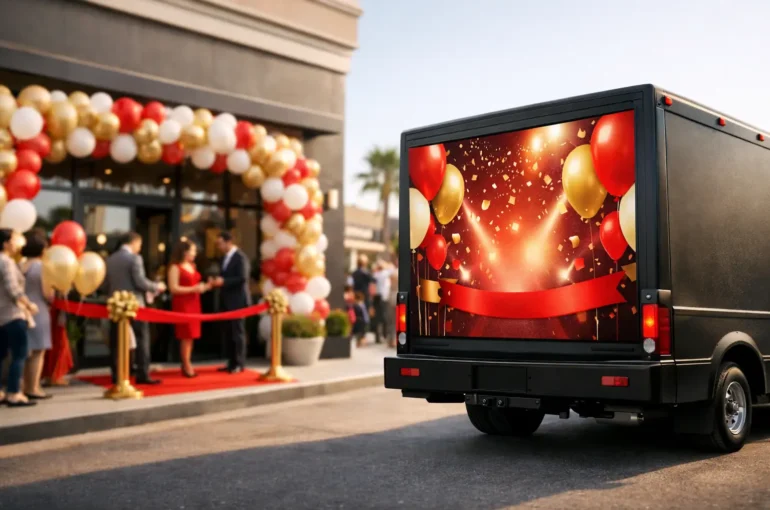
A grand opening has a short window to make a long impression. The fit-out is finished, the team is ready and the doors are about to open – but none of that matters if local people do not know where to find you. Mobile advertising for grand opening campaigns puts your message where the crowd already is: on busy roads, near retail precincts, around transport hubs and outside the events pulling people into the area.
For a new store, venue, development, service centre or event, the aim is not simply awareness. It is to create a reason to visit now. Put the opening date, location and offer in front of people repeatedly, then direct that attention towards your doorstep.
Why a grand opening needs street-level visibility
Digital ads can support an opening, but they compete with every other notification, post and promotion on a person’s screen. A mobile billboard cannot be swiped past. It makes the opening feel real, active and close by – especially when it is seen on the route to work, at lunch or on the way to the shops.
This matters because most launch decisions are local. A café may need office workers within a few blocks. A gym needs residents in nearby suburbs. A retail opening benefits from shoppers already travelling to a precinct. A property display suite needs to reach people moving through the surrounding growth corridor. Mobile outdoor advertising lets a campaign move into those high-value areas instead of waiting for an audience to notice a fixed sign elsewhere.
Repeated exposure also builds familiarity quickly. Someone who sees your grand opening message on Monday morning, again outside a shopping centre on Wednesday and near a weekend event on Saturday is far more likely to remember the name, date and location. That repetition is what turns a new business from an unknown address into a place people plan to visit.
Build mobile advertising for grand opening momentum
The strongest opening campaigns do not start on launch day. They build anticipation, create a burst of activity around the event, then keep the message moving long enough to capture people who saw it but could not attend straight away.
Start early enough to be remembered
For most openings, allow two to four weeks of pre-launch activity. Begin with a simple teaser or a clear announcement: what is opening, where it is located and when the doors open. If there is a compelling reason to act – an opening-week offer, prize, giveaway, live entertainment or limited booking availability – make that benefit visible from a distance.
Keep the message tight. A passing audience has seconds, not minutes. One strong headline, a location cue, an opening date and a short call to action will do more work than a crowded design full of small print. If the venue is slightly off the main road, include a familiar local landmark or suburb name to make the destination easier to place.
Own the opening day area
On opening day, concentrate mobile formats around the site and the places where your likely customers are already spending time. This could include nearby arterial roads, retail strips, commuter routes, sport grounds, markets or event precincts. The best route depends on the customer, not just traffic volume.
A high-traffic road is useful if it carries the right people and gives the creative enough viewing time. For a family-focused business, time near schools, weekend sport and shopping areas may be more valuable than a fast-moving commuter corridor. For a CBD launch, lunch-hour routes and transport interchanges can deliver stronger relevance than distant suburban traffic.
Add event screens or walking and bike boards where foot traffic matters. A digital mobile billboard builds broad awareness across a route. An Event Screen 8 or Event Screen 16 can create a focal point at the opening itself, displaying launch offers, social content, schedules or sponsor messages. Bike boards and walking boards work well in dense precincts where vehicles cannot get close to the crowd.
Keep the campaign moving after the ribbon is cut
A packed first day is valuable, but an opening campaign should not disappear the moment the photos are taken. Continue for several days or a week with a clear follow-up message: now open, opening offer extended, appointments available or visit this weekend.
This stage catches the audience that noticed the campaign before launch but had other plans. It also helps convert curiosity into a visit once the business has visible activity, customer reviews and real-world momentum. For hospitality, retail and fitness businesses, this follow-up period can be the difference between a busy launch and a dependable first month.
Choose the format around the job it needs to do
There is no single best format for every grand opening. The right selection depends on your geography, creative, budget, opening schedule and the action you want people to take.
Digital mobile billboards suit campaigns that need movement, flexibility and more than one message. Use them to rotate a teaser, opening date and time-sensitive offer, or to tailor creative across different parts of a route. They are particularly effective when a campaign needs to cover several suburbs or build excitement across a wider metro area.
Conventional mobile billboards deliver large, consistent visibility with a single bold message. They are a strong choice when the opening date and location are fixed and the creative needs to be instantly recognisable. Relocatable billboards and solar ad trailers can hold a position near a site, event entrance or key approach road where permitted, helping you claim the local area over a longer period.
For launches with a crowd component, event screens add more than exposure. They can support the experience on site, from countdowns and product demonstrations to entertainment schedules and live content. The trade-off is that screens work best when there is a planned audience and a suitable event footprint. If your main challenge is reaching people before they decide where to go, a moving route may deliver better results.
Make the creative readable at a glance
Outdoor creative is not a brochure. If a person cannot understand it quickly from a car, footpath or café window, it is carrying too much information.
Lead with the thing that makes the opening worth noticing. That may be “Now Open”, “Grand Opening Saturday”, “Free Coffee All Day” or “Inspections Open This Weekend”. Then make the business name, suburb or address cue impossible to miss. Use high contrast, large type and a simple visual that supports the offer rather than competing with it.
Avoid relying on QR codes as the only response path. They can work for pedestrians at an event or a stationary activation, but they are not practical for people driving past. A short website address, memorable business name, clear suburb and straightforward offer give the audience other ways to act later.
Before production, check artwork specifications for the selected format. Designing to the right dimensions and viewing conditions prevents last-minute compromises and helps the final display look sharp on the street.
Route for relevance, not just reach
A campaign route should answer a basic question: where are the people most likely to become customers? Start with a practical map of your catchment. Include the opening location, direct access roads, major retail areas, office clusters, transport points, competing destinations and local events during the campaign period.
Then consider timing. A breakfast venue may need morning commuter and school-run exposure. A restaurant opening may benefit from late afternoon and evening activity near entertainment areas. A weekend property launch needs strong coverage on Saturday and Sunday, not only weekday peak hour. Route planning is where mobile media becomes more than a moving sign – it becomes a location-responsive campaign.
For multi-site or multi-city openings, consistency matters. Use one strong core message across each market, then adapt the location line, offer or schedule where needed. Mobile Outdoor Media can coordinate national execution while retaining the local knowledge needed to place campaigns where they will work hardest.
Measure what matters after launch
Grand opening advertising should be judged against business outcomes, not just whether the vehicle looked impressive. Set a simple baseline before the campaign begins, then track daily visits, bookings, enquiry volume, offer redemptions, walk-ins and sales across the launch period.
Use a campaign-specific offer, code or landing page if it suits the business. Ask walk-in customers how they heard about the opening. Staff feedback is useful too: if people arrive quoting the billboard message or saying they saw it near a particular landmark, you have valuable evidence about which creative and locations are landing.
Not every campaign needs a complex attribution model. For a local opening, a visible lift in foot traffic during a tightly targeted campaign can be a meaningful result. The key is to compare performance against the opening plan, then use what you learn to shape the next fortnight of advertising.
A grand opening is your permission to be loud, visible and impossible to miss. Put a clear message on the streets before the crowd chooses somewhere else to go, keep it moving through the right locations, and give people a reason to walk through your door.
Related reading: Outdoor Advertising: 2026 Grand Opening Strategic Guide
Opening day locked in? Book your opening campaign.