Click to Call
Mobile Billboard Advertising Cost Australia
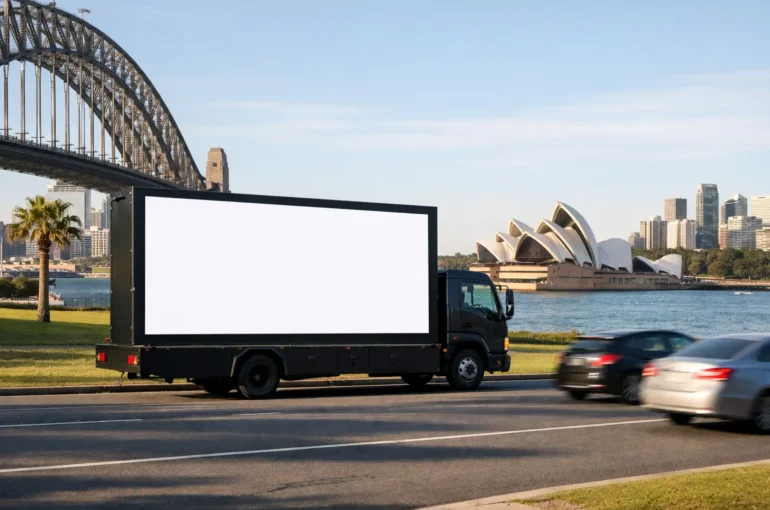
A mobile billboard parked outside a packed venue, moving through a retail precinct or circling a major event does more than display an ad. It puts your message in front of people who are already out, active and ready to notice. That is why mobile billboard advertising cost Australia is best assessed as a campaign investment, not a flat rate on a rate card.
The right format, route and campaign length can make a modest budget work hard. The wrong plan can spend too much time in low-value areas. Start with where your audience will be, when they will be there and what you need them to do after seeing your message.
What affects mobile billboard advertising cost in Australia?
Mobile billboard pricing changes according to the media format, city, campaign duration, operating hours and production requirements. A single-day activation around an event will be priced differently from a multi-week campaign covering several suburbs or capital cities.
Digital mobile billboards generally involve a higher investment than conventional static panels because they carry LED screen technology, dynamic creative capability and the ability to run multiple messages. They are ideal when you need a campaign to feel current, change offers by time of day or build impact after dark. Conventional mobile billboards can be a highly effective option for campaigns with one clear message and a strong visual design that needs repeated exposure.
Solar ad trailers, relocatable billboards, bike boards and walking boards each solve a different visibility problem. A trailer can hold a strategic position near a retail centre, development site or busy corridor. Bike and walking formats work particularly well in dense pedestrian zones, around campuses, nightlife precincts, stadiums and event entrances. Event screens suit brands that need a large-format presence where crowds gather and stay.
There is no useful one-size-fits-all figure because the campaign conditions matter. A quote should reflect the actual job: your selected format, target area, live dates, daily hours, routing requirements, creative, production and any event-specific access arrangements.
Pay for audience concentration, not just kilometres
A mobile billboard is not valuable simply because it travels a long distance. It is valuable because it can be placed where exposure is likely to count. A shorter route through high-footfall shopping streets, commuter corridors and venue approaches may deliver more useful visibility than an all-day drive through quieter outer areas.
This is where route planning affects cost and outcomes. Peak-hour commuter activity, lunch crowds, weekend retail traffic, school-holiday audiences and major-event arrivals all create different opportunities. If your audience is local, concentrate the campaign in that local area. If you are launching nationally, build a consistent plan across cities while adapting routes to each market.
For a property project, the priority may be repeated presence around the development, nearby shopping areas and arterial roads. For a hospitality opening, it may be a tight radius around the venue during the days and hours people make plans. For a concert, sporting fixture or festival, the strongest play is often to own the approach routes and surrounding precinct before gates open, then remain visible as crowds leave.
More targeted movement can sometimes reduce wasted spend. It can also require more detailed scheduling. The best option depends on whether your goal is broad awareness, local action, event impact or repeated frequency.
The cost variables to settle before requesting a quote
A clear brief gets you a more accurate price and a better campaign recommendation. Before comparing options, decide what success looks like. Is it store visits, event attendance, brand recall, enquiries, a product launch or support for another channel such as social, radio or retail activity?
Provide your preferred city or cities, campaign dates and a realistic window for flexibility. Availability can vary around public holidays, major sporting fixtures, festivals and busy retail periods. Shifting a campaign by a few days, extending its duration or selecting an alternative format can create a better buying opportunity without weakening the outcome.
You should also clarify whether you have finished artwork. Artwork production, panel printing, installation and digital creative specifications can affect the total campaign cost. Strong outdoor creative is usually simple: one message, a dominant visual, clear branding and a call to action that can be understood in seconds. Trying to cram a brochure onto a moving screen or panel is an expensive way to be ignored.
For digital campaigns, consider whether one creative is enough or whether the message should change by location, time or audience. A breakfast offer, an afternoon promotion and an evening event reminder can run as different creative files on the same campaign. That flexibility has value when it supports a genuine customer decision, not when it adds complexity for its own sake.
Choosing the format that fits the job
Digital mobile billboards for fast-changing campaigns
Choose a digital mobile billboard when speed, movement and flexibility matter. It gives brands a strong day-and-night presence and allows messaging to be refreshed without reprinting panels. It is a practical fit for retail promotions, entertainment launches, agency activations, election campaigns, time-sensitive offers and multi-message schedules.
The trade-off is that digital is not automatically the best choice for every campaign. If your creative is fixed, your audience is concentrated around a single location and you need sustained presence, a static or relocatable option may be the more efficient buy.
Conventional mobile billboards for one big message
A conventional mobile billboard is built for impact through repetition. It puts the same clear campaign visual in front of commuters, shoppers and pedestrians again and again. This makes it particularly effective for brand launches, property marketing, local services, recruitment drives and products that benefit from immediate recognition.
Keep the message decisive. A phone number, short URL or memorable offer can work, but it must remain readable at a glance. The value is in visual scale and frequency, not fine print.
Event, bike and walking media for street-level engagement
When a crowd is on foot, take the campaign to footpath level. Bike boards and walking boards create close-range exposure in areas where a larger vehicle cannot always operate effectively. They are agile, highly visible and useful for sampling support, venue promotions, street-team activity and busy urban precincts.
Event Screen 8 and Event Screen 16 units give sponsors, organisers and brands a larger canvas for programming, announcements, live content and advertising. Costs will reflect screen size, deployment period, location, technical needs and the level of event support required. For the right crowd, that presence can become part of the event experience rather than another ad in the background.
How to make your budget work harder
Do not split a limited budget across too many formats, suburbs or messages. Concentrate it where it can create momentum. A campaign that dominates a few relevant locations for several days is often more memorable than one that appears briefly everywhere.
Build around moments of intent. A retailer can target shoppers near competing stores or major centres. A food venue can reach people near offices before lunch and entertainment precincts before dinner. An event promoter can follow audience movement toward transport hubs, car parks and venue entrances. This is the advantage of mobile outdoor media: you can respond to the way people actually move through a city.
Measure beyond impressions alone. Track promotional code use, web traffic during campaign hours, enquiries by suburb, ticket sales, store visits and changes in search activity. If your campaign includes a simple, unique offer or landing-page reference, it becomes easier to connect street exposure to commercial action.
For multi-city campaigns, centralised planning matters. Mobile Outdoor Media can coordinate national execution while applying local route knowledge in each market, so your campaign looks consistent without treating Brisbane, Sydney, Melbourne, Perth and regional centres as identical audiences.
Get a quote built around the outcome
When comparing mobile billboard advertising cost in Australia, ask what is included and what the campaign is designed to achieve. Check the format, run time, planned area, production requirements, creative delivery, campaign management and any operational considerations that apply to your location or event.
The cheapest option is not always the best value if it misses the streets, times and audiences that matter. Equally, a premium format is not necessary if a focused conventional panel or street-level deployment will do the job better. Put your budget where your customers already are, give them a message they can absorb quickly and make every hour on the street earn its place.
Related reading: Mobile Billboard Hire Cost Australia: 2026 Pricing and ROI Guide
Want a figure for your own campaign? Request a quote.