Click to Call
Outdoor Media Trends Driving Australian Reach
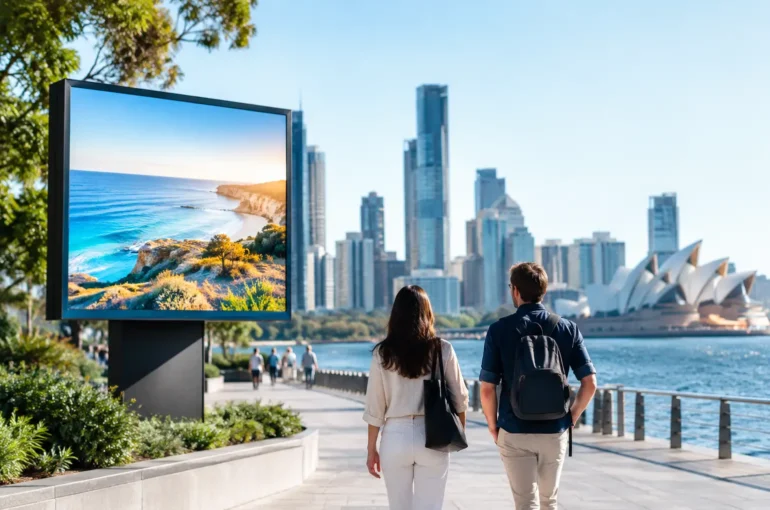
A crowded feed disappears with one swipe. A well-planned outdoor campaign can put your message in front of people on their commute, outside a packed venue, near a retail precinct or right where a purchase decision is being made. That is why outdoor media trends are moving towards formats that are more visible, more flexible and more connected to real audience movement.
For Australian brands, the shift is practical. Media buyers want reach, but they also want control over where, when and how a campaign appears. Fixed sites still have a role, particularly where a single location delivers constant high traffic. But mobile, digital and event-led formats give campaigns a stronger ability to respond to changing footfall, local opportunities and time-sensitive promotions.
Outdoor media trends are becoming more mobile
The biggest change in out-of-home is simple: audiences move, so campaigns need to move with them. Australians do not experience a city from one point. They travel between work, home, shops, entertainment precincts, sporting grounds, beaches, transport hubs and events. A message placed only in one location can miss much of that journey.
Mobile billboards take the campaign to the street. They can circulate through selected suburbs, target major arterial roads, work around shopping centres, or build presence near competing businesses and venues. This is particularly useful for retail launches, property releases, hospitality promotions, elections, entertainment events and multi-location offers.
The advantage is not just movement for movement’s sake. It is repeated exposure in the places that matter. A vehicle running a considered route can build recognition across a local market, while a national campaign can maintain the same creative across multiple cities without relying on a patchwork of unrelated suppliers.
That flexibility does require planning. A mobile format is not a replacement for every high-profile fixed billboard. If a brand needs permanent visibility at one major intersection for months, a static site may be the right tool. If the goal is to own a wider area, react to activity on the ground or reach several audience clusters, mobile media earns its place.
Location intelligence is replacing broad assumptions
Campaign planning is becoming more precise. Rather than asking for a city’s busiest road, brands are asking where their actual customers are likely to be at particular times. A gym may want early-morning traffic near business districts. A food delivery platform may focus on dinner-time activity around apartment precincts. A developer may need sustained exposure along routes leading into a new estate.
This does not mean every campaign needs complicated data modelling. It means using local knowledge properly. Routes should reflect trading hours, event schedules, school holidays, commuter flows and the geography of the offer. The best outdoor campaigns make a location feel chosen, not merely available.
Digital outdoor is built for timely creative
Digital screens have changed the pace of outdoor advertising. A campaign can now refresh creative without replacing printed panels, run different messages by daypart, and bring sharper relevance to a live environment.
For marketers, this creates opportunities to match the message to the moment. A breakfast promotion can appear in the morning, a lunch offer can follow at midday, and an event countdown can build urgency in the lead-up to doors opening. Digital mobile billboards and event screens can carry this responsiveness directly into high-traffic areas and live activations.
The creative still has to work at street speed. More capability does not justify more clutter. A clear headline, strong brand cue, one offer or action, and high-contrast design will usually outperform a screen crammed with detail. People may have only a few seconds to take it in from a car, footpath or queue.
Digital outdoor also works best when the message has a reason to change. If the same creative is running for a fortnight, printed media may be a more cost-effective choice depending on the route and duration. Use digital when timing, variety or fast updates will genuinely improve the campaign result.
Events are becoming high-value media moments
Events are no longer treated as a simple sponsorship logo opportunity. They are concentrated audience moments, with people arriving, waiting, sharing content, buying food and discussing what is happening around them. This gives brands a chance to create visibility that feels part of the occasion.
Event screens, mobile displays, bike boards and walking boards can work across the entire audience journey. They can build awareness outside the venue, direct people towards an activation, carry offers through nearby precincts or keep a sponsor visible during breaks in programming. For organisers, they can also support wayfinding, schedules, partner recognition and safety messaging.
The strongest event campaigns recognise the difference between a crowd and an audience. A large crowd is not automatically valuable if it has no connection to the offer. A smaller, well-matched event can deliver more meaningful attention and better recall. Match the format, creative and call to action to why people are there.
Physical and social reach now reinforce each other
Outdoor is increasingly designed to appear in both public space and personal content. A striking mobile billboard outside a festival, a branded screen at a community event or an unexpected bike-board activation can become a photo, story or video shared by attendees.
That secondary reach is valuable, but it should not be the only goal. Design the campaign first for people who see it in person. Make the message legible, the brand obvious and the visual distinctive. If it is worth photographing, sharing becomes a bonus rather than a gamble.
Sustainability is moving from claim to campaign choice
Sustainability is influencing outdoor decisions, particularly for organisations that need to show practical action rather than rely on broad environmental language. Solar-powered advertising trailers, reusable display infrastructure and digital creative updates can support lower-waste campaign delivery in the right circumstances.
There are trade-offs. Sustainable media choices should still deliver the reach, visibility and operational suitability a campaign needs. A format is only a smart choice if it can operate effectively at the intended location and meet the event or campaign requirement. Ask direct questions about power, transport, print production, reusability and deployment conditions before making claims.
For brands, the more credible approach is to align the medium with a wider operational commitment. Avoid turning a solar screen or reusable asset into a vague green message. Explain the relevant choice clearly and keep the campaign focused on what the audience needs to know.
Measurement is becoming more accountable
Outdoor has always delivered public visibility, but clients increasingly want a clearer view of what that visibility is likely to achieve. The focus is moving beyond a single headline audience figure towards campaign evidence that supports better future planning.
Depending on the format, campaign reporting can include route records, operating times, photographs, screen schedules, deployment locations and audience estimates. These records help confirm delivery and provide useful material for internal stakeholders, agencies and campaign reviews.
Measurement should be tied to the actual objective. A national brand launch may prioritise reach and frequency. A local sale may watch store traffic, enquiries or redemption activity. An event activation may track attendance at a stand, scans, samples distributed or social engagement. Do not judge every outdoor campaign by a click. Street-level media often builds familiarity and consideration before the customer takes a measurable action.
Build campaigns around the audience, not the asset
The most useful trend is not a new screen, vehicle or format. It is the move towards campaign planning that starts with the audience and works backwards. Ask where people gather, how they travel, what they are doing, how long they will see the message and what action makes sense at that point.
From there, choose the media mix. A digital mobile billboard may create broad metropolitan visibility. Relocatable billboards can establish a strong local presence. Event Screen 8 or Event Screen 16 units can command attention at live sites. Bike boards and walking boards can bring a message close to dense foot traffic where vehicles are less practical.
For national execution, consistency matters just as much as local relevance. Mobile Outdoor Media helps brands coordinate campaign delivery across Australian cities while using local operators who understand each market. That means one campaign can hold its visual identity while still adapting routes, timing and formats to the opportunity on the ground.
The next strong outdoor campaign will not wait for customers to find it. Put it on the routes they travel, near the places they choose and at the moments they are ready to notice. Start with the location, give the creative one clear job, and make your message impossible to miss.