Click to Call
Best Advertising Formats for Festivals in Australia
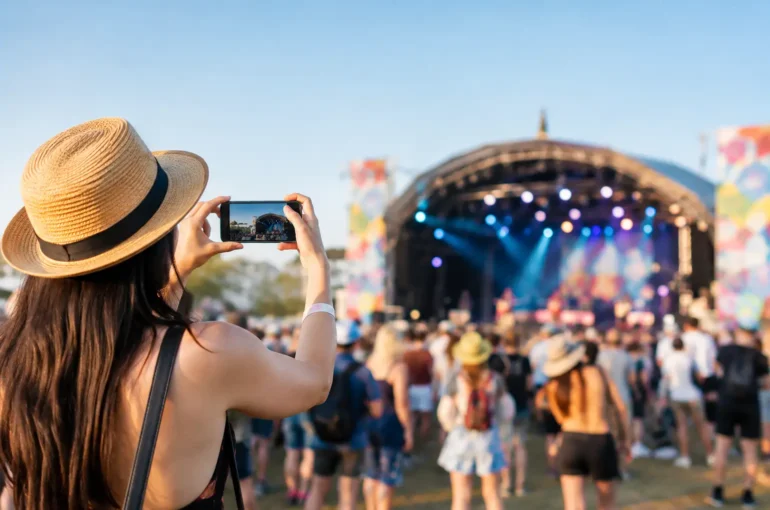
Festival crowds do not sit still. They arrive in waves, queue at gates, move between stages, line up for food and spill into nearby streets long after the headline act finishes. The best advertising formats for festivals move with that behaviour, putting your message in front of people repeatedly instead of hoping they notice a single fixed sign.
For brands, promoters and event teams, the right format depends on the site footprint, crowd flow, sponsorship rights, campaign objective and budget. A national music festival needs something different from a regional food and wine weekend or a one-night sporting event. The strongest campaigns combine high-impact visibility with practical placement planning.
Best advertising formats for festivals
Digital mobile billboards for high-frequency reach
Digital mobile billboards are built for the busy roads and arrival zones around festivals. They can run scheduled creative throughout the day, making them ideal for brands with multiple offers, event reminders, sponsor messages or time-sensitive calls to action.
Use them on key approach routes, near public transport interchanges, around accommodation precincts and on roads leading into the venue. A truck circulating these areas creates repeated exposure among attendees, rideshare passengers, pedestrians and local traffic. It also reaches people who may never enter the festival but still influence where groups eat, shop or continue the night.
The advantage is flexibility. Change creative by time of day, promote a pre-event offer in the morning, switch to a product message during peak arrivals, then direct the after-party crowd to a nearby venue at night. The trade-off is that route planning matters. A mobile billboard needs approved, high-traffic paths and enough operating time to build frequency.
Event screens for on-site impact
When you have permission to advertise inside the event footprint, large event screens put your brand in the centre of the action. Event Screen 8 and Event Screen 16 units suit sponsor activations, live programming, sporting fixtures, community festivals and entertainment precincts where people naturally pause and look up.
These screens work especially well at entry points, bar areas, food zones, rest spaces and between-stage corridors. They can display branded video, still imagery, schedules, offers, social content or live event messaging. A screen gives your campaign more than a logo placement – it gives it scale and a reason to be noticed.
Keep the message simple. Festival audiences are distracted, often walking with friends and surrounded by sound, colour and movement. Use bold visual assets, minimal copy and a clear brand cue. If there is a promotion, make the next action obvious: visit a stand, scan a code, enter a competition or head to a nearby retailer.
Solar ad trailers for fixed-position visibility
Solar ad trailers are a practical choice when you need a prominent message held in one strategic location for the duration of an event. Position them near car parks, entry queues, shuttle stops, external activation zones or high-traffic roads subject to site and local approvals.
Their value lies in consistency. Rather than passing an audience once, the trailer remains visible to people arriving, leaving and moving around the site. This makes it a strong format for directional messaging, naming-rights partners, retail offers and brand campaigns that need a clear visual presence all weekend.
A fixed format does have limits. If the crowd pattern shifts or an access road closes, you cannot simply follow the audience. Choose the location after reviewing site maps, pedestrian flow, vehicle access and line of sight from a distance.
Conventional mobile billboards for bold, uncomplicated campaigns
A conventional mobile billboard delivers a large-format message without relying on a screen. It is an effective option for campaigns with one strong creative idea: a new product launch, a ticketing push, a retail opening or a recognisable brand campaign.
This format is often the smart call when the creative does not need frequent updates and you want maximum impact from a single visual. It is also useful for pre-event promotion, circulating through nearby suburbs, shopping districts and commuter routes in the days before the festival.
For best results, avoid turning the billboard into a brochure. A brand name, memorable image, short headline and clear action will outperform a panel crowded with detail. If people cannot understand it in a few seconds from the footpath, back seat or passing car, simplify it.
Bike boards and walking boards for close-up engagement
Bike boards and walking boards bring a campaign right into pedestrian spaces. They are suited to busy entertainment precincts, external queue areas, city-centre festivals, beachside events and street activations where larger vehicles cannot access or would interrupt the experience.
These formats excel when proximity matters. A team can work around foot traffic, distribute approved promotional material, direct people towards an activation or create a highly visible branded presence near the venue. They are particularly effective for sampling campaigns, venue promotions and offers that people can act on immediately.
They are not designed to replace broad-reach outdoor media. Their strength is targeted, face-to-face visibility in concentrated pedestrian zones. Pair them with mobile billboards or screens if you need both wide awareness and street-level interaction.
Relocatable billboards for owning key approaches
Relocatable billboards give brands a substantial visual footprint near event routes without the long commitment of permanent outdoor inventory. They can work well on private land near major approach roads, car parks, retail hubs and areas where festival traffic builds.
This is a useful format for campaigns that need to start early. Run a relocatable billboard in the lead-up to the event, retain it through festival weekend, then keep it live to capture post-event traffic. For annual events, the same placement can build recognition year after year.
Availability, landowner permission, council requirements and sightlines will shape what is possible. Start planning early, particularly for major festivals where nearby high-visibility locations are secured well ahead of time.
Match the format to the festival moment
The best campaigns do not treat every festival attendee as one audience. Build your plan around moments that affect attention and action.
Before the event, reach people on commuter routes, around retail centres and in the suburbs or cities feeding the festival. Digital and conventional mobile billboards are strong here because they can cover multiple areas and build anticipation.
During arrival, own the roads, shuttle zones and queue lines. This is where large mobile formats, solar trailers and event screens perform. People have time to notice messages while waiting, navigating or looking for entry information.
Inside or immediately around the site, prioritise screens, bike boards and walking boards. These formats are effective where people are on foot and ready to engage with a sponsor, offer or activation.
After the final set, shift the message towards transport, food, accommodation, nightlife or next-day retail. A campaign that changes with the crowd’s needs will feel useful rather than intrusive.
Plan for permissions, production and practical conditions
Festival advertising is not just a media booking. It is an operational exercise. Confirm sponsor category exclusivity, site access rules, bump-in times, vehicle routes, power requirements, weather contingencies and approvals before locking creative.
Build artwork for the format, not for a desktop screen. Large type, high contrast and one clear message will travel further than fine print. If the campaign includes digital content, prepare variations in advance so the right creative can run at the right time.
It also pays to work from a single campaign plan across every location. Mobile Outdoor Media can coordinate mobile, digital and event-based formats across Australian cities and regional areas, helping brands maintain consistent creative while adapting placement to local conditions.
Make your festival spend visible where it counts
A festival is a temporary city with its own traffic patterns, rituals and pressure points. Do not place your brand on the edge of that activity and hope for attention. Put it on the route in, at the queue, beside the crowd and in the moments people are deciding what to do next.
Choose the format that fits the audience behaviour, secure the right locations early and give your creative room to be seen. That is how festival advertising earns attention well beyond the final encore.