Click to Call

Campaign Production Guide for Outdoor Impact
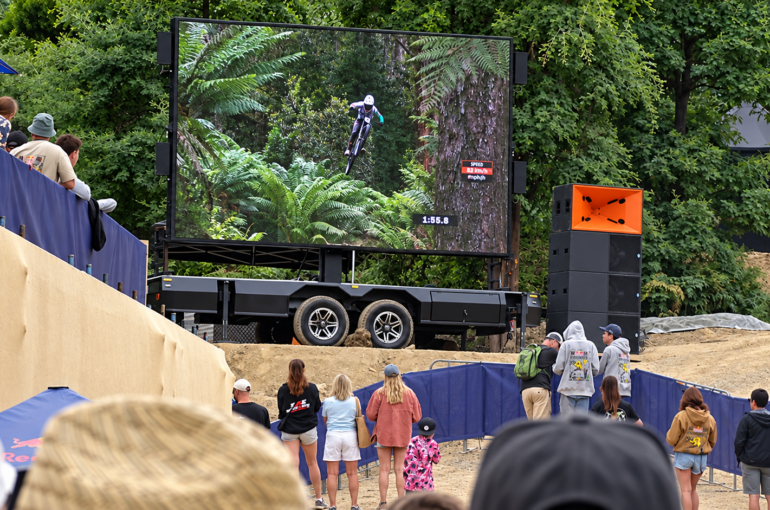
A mobile billboard with a great route and a weak file is still a missed opportunity. This campaign production guide is built for marketers, agencies and event teams that need outdoor advertising to look sharp, launch on time and earn attention where people are actually moving.
Campaign production is not just the last job before a vehicle hits the road. It is where creative, media planning, printing, screen specifications, approvals and timing meet. Get those details right early and your message can own busy retail precincts, commuter corridors, venue approaches and event crowds. Leave them late and even a strong idea can become expensive, delayed or hard to read.
Start with the job your campaign needs to do
Before choosing a format or briefing a designer, decide what one outcome matters most. Are you building broad awareness for a new opening? Driving ticket sales before a weekend event? Promoting a limited-time offer in selected suburbs? Supporting a multi-city brand launch?
That decision shapes the production approach. A campaign designed to create recognition can use a bold brand asset and a short headline. A campaign designed to drive immediate action needs a clear offer, deadline and response path. Trying to make one mobile ad do every job often produces crowded creative that is easy to ignore from the kerb.
Set the campaign’s audience, key locations, flight dates and primary message at the same time. For example, a hospitality venue might target lunch traffic near office districts, while a property developer may want repeated exposure around key growth corridors and inspection areas. The format, route and creative should support that specific behaviour.
Build outdoor creative for the street, not the screen
People do not experience mobile outdoor advertising like a social post. They may see it from a car, across an intersection, while walking through a shopping strip or among a crowded event queue. Attention is brief, viewing distances vary and competing visual noise is everywhere.
Make the message readable in seconds. A practical rule is one core idea, a dominant visual, a short headline and only the information needed for the audience to act. Large type, strong contrast and generous empty space will usually outperform a busy layout packed with product details.
Avoid treating the available panel or screen as a brochure page. Fine print, thin fonts, long URLs and multiple competing calls to action lose impact at street level. If your campaign has several benefits to communicate, rotate different messages across digital creative or use a sequence across the campaign period rather than forcing every point into one execution.
Keep branding obvious
Your logo, brand colours and product should be recognised quickly, but recognition does not mean placing a small logo in every spare corner. Give the brand room to breathe. If a distinctive colour field, product pack or campaign line already signals who you are, use that visual confidence.
This is especially valuable for repeat exposure. Mobile media can place the same message in front of audiences more than once across busy areas. Consistent creative helps those impressions build instead of making each sighting feel like a new, disconnected ad.
Match the file to the format
Digital mobile billboards, event screens, bike boards, walking boards and printed mobile panels each have different production needs. Screen dimensions, orientation, resolution, file type, frame rate and audio capability can all affect what is supplied. Printed work also requires the correct scale, bleed, colour settings and high-resolution artwork.
Ask for artwork specifications before finalising creative, not after the design has been approved internally. This gives your team time to adapt layouts for portrait or landscape displays, check legibility and avoid a rush rebuild. A design that looks excellent on a laptop can still need changes to work properly on a large moving display.
Use a production timeline that protects the launch date
Outdoor campaigns are often tied to fixed moments: an event date, store opening, product release, school holiday period or sale. The launch date is not flexible simply because the artwork is late.
Work backwards from the first live day. Allow time for creative development, stakeholder approvals, artwork checks, revisions, print production where required, installation or upload, route planning and any location or event coordination. National campaigns need additional lead time because production and deployment may involve several markets.
The exact timeframe depends on the format and campaign complexity. Digital assets can generally move faster than printed panels, but that does not remove the need for file checks and approval. Printed production requires more lead time, particularly where custom builds, large-format output or multiple locations are involved.
Treat the approved artwork deadline as a real operational deadline, not a hopeful suggestion. If an offer, price or event detail is likely to change, flag it in the initial brief. It may be smarter to design a flexible template or run digital creative that can be updated rather than reprinting a full panel at the last minute.
Give your production partner a complete brief
A vague brief creates avoidable questions. A clear one keeps your campaign moving and helps production teams spot practical issues before they affect the live date.
Include the campaign objective, dates, markets, selected formats, intended audience, key message, mandatory brand elements, call to action and final approvers. If the activity is event-based, include venue access details, bump-in times and any event rules that could affect placement or screen operation.
For a national rollout, name one person who can make decisions across all markets. Local knowledge matters, but conflicting approvals from multiple contacts can stall a coordinated campaign. Mobile Outdoor Media can coordinate production and delivery across Australian markets, while local operators help make execution fit the conditions on the ground.
Check every detail before it goes live
The final artwork review should be more than a quick glance at spelling. Read the ad from a distance on screen if possible. Check that pricing, dates, URLs, QR codes, legal copy and contact details are accurate. Confirm that the offer is still valid for every location and every campaign day.
Use this final checklist before production:
- The headline can be understood in a few seconds.
- The logo and call to action are visible at a distance.
- Images are high quality and have permission for outdoor use.
- Artwork dimensions and file settings match the booked format.
- Dates, prices, terms and venue details have final approval.
- Digital content has been tested for movement, timing and readability.
QR codes deserve particular care. They can be useful near stationary audiences, such as event queues or pedestrian areas, but they are not always practical for people travelling past a moving vehicle. If scanning is essential, make the code large enough, provide a simple back-up URL and use placement where people can safely pause.
Plan routes and creative together
Media planning and production should not be separate conversations. A mobile billboard travelling through high-traffic roads needs a different visual treatment from walking boards operating through a pedestrian mall. Event screens can support longer dwell times and richer content, while bike boards are well suited to targeted local presence and repeated movement through active precincts.
Think about the audience’s speed, distance and likely mindset. Commuters need fast recognition. Shoppers can absorb a stronger offer. Event audiences may engage with countdowns, sponsor messages, social prompts or live information. The right creative is not just attractive – it is built for how and where it will be seen.
There is also a trade-off between reach and precision. A broader route can put your message in front of more people, while a concentrated route can dominate a smaller, high-value catchment. Neither is automatically better. The right choice comes back to whether you need scale, local ownership or a combination of both.
Measure what matters after launch
Production does not end the moment the advertising goes live. Capture photos and campaign reports where available, confirm delivery against the planned schedule and compare activity with the result you wanted. For retail or hospitality campaigns, track sales patterns, bookings, enquiries or redemption activity. For events, watch ticket movement and website traffic around key campaign periods.
Outdoor advertising often works alongside other channels rather than replacing them. Use the same core campaign line across paid social, radio, email or in-venue signage so people who see the message on the street recognise it again later. This creates a stronger path from attention to action.
The best campaigns are not the ones with the most text or the flashiest artwork. They are the ones that make one clear promise, appear where the right audience is gathered and arrive fully checked before the first kilometre is driven. Build that discipline into production, and your next campaign has a far better chance of being seen, remembered and acted on.