Click to Call


Street Activations That Get Your Brand Seen
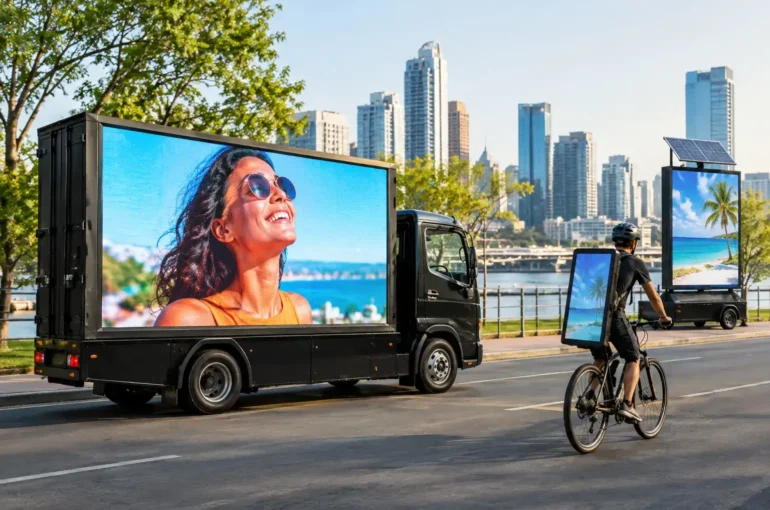
A crowded precinct, a packed event entrance or a busy retail strip gives brands a short window to earn attention. Street activations make that window count by putting your message directly in the path of people who are out, moving and ready to notice something different. The strongest campaigns do not wait for an audience to find an ad. They take the ad to the audience.
For businesses, agencies and event teams, that changes the planning question. Rather than asking which fixed site is available, ask where your ideal customers will be, what they will be doing and how often they need to see your brand before they act.
What are street activations?
Street activations are live, location-based marketing campaigns that bring a brand into public spaces. They can include mobile billboards, digital screens, bike boards, walking boards, event displays, sampling teams and branded installations. What connects them is simple: the campaign is deployed where real people gather, commute, shop, queue, socialise or attend an event.
Unlike a static billboard that stays in one location, a street activation can follow the audience. A digital mobile billboard can work a retail precinct at lunch, travel near commuter routes in the afternoon and reach a venue crowd before doors open. A walking board team can put a time-sensitive offer into a dense foot-traffic area. An event screen can give a sponsor visibility where the audience is already settled and engaged.
That flexibility is the point. Street-level media lets brands respond to the geography of demand, not just the availability of ad space.
Why street activations cut through
People have learned to scroll past digital ads and filter out familiar advertising environments. Public-space campaigns interrupt that pattern because they appear in a real, shared moment. A large screen turning onto a busy street, a mobile billboard outside a major venue or a branded bike board travelling through a shopping district is difficult to ignore.
Visibility is only one part of the value. Repetition matters just as much. When a campaign passes through the same high-traffic areas at relevant times, audiences see the message more than once. That helps build recognition quickly, particularly for new launches, limited-time offers, property releases, entertainment promotions and local retail campaigns.
There is also a practical advantage for campaign managers. Mobile formats can be scheduled around trading hours, event programs, local traffic patterns and known audience hotspots. A fixed-site booking may give broad exposure, but it cannot move closer to the action when a crowd forms somewhere else.
Start with the moment you want to own
Effective activations begin with a clear audience moment, not a vehicle or screen choice. A fitness brand may want the early-morning commuter rush near transport hubs. A hospitality venue may need visibility around office precincts before lunch and entertainment areas after work. A sports promoter may target approach roads, nearby retail areas and the venue perimeter before a match.
Be specific about the action you want people to take. Are you building awareness for a new product? Driving shoppers to a nearby store? Increasing ticket sales before an event? Supporting a national campaign with local presence? The answer shapes the route, creative, format and call to action.
Timing can change the result as much as location. A campaign promoting a weekend sale needs momentum in the days leading up to it. A same-day event message needs to reach people while they can still make plans. For a property project, repeated exposure over several weeks may be more useful than a single high-intensity day.
Match the format to the job
There is no single best street activation format. The right choice depends on crowd density, campaign duration, message complexity, budget and the physical environment.
Digital mobile billboards suit campaigns that need movement, large-scale visibility and multiple creative messages. They are especially useful when a brand wants to cover several key areas in a day or run dynamic creative around events, retail precincts and major commuter corridors. Digital screens also allow campaign messages to rotate, making them a strong option for brands with different offers, locations or audience segments.
Conventional mobile billboards work well when the creative is clear, bold and built to be seen fast. They offer sustained presence on the road and can build familiarity across a defined territory. For campaigns that need a simpler, high-impact message repeated consistently, this can be a highly efficient choice.
Bike boards and walking boards come into their own in areas where vehicles cannot get close enough to the audience. Think busy pedestrian zones, markets, outdoor dining strips, university areas and event queues. They deliver proximity and flexibility, but they need concise creative. People should understand the message in seconds.
Event screens are built for attention in one place. They can support sponsor recognition, live programming, event information and brand content at sporting fixtures, community events, festivals and activations. Their value rises when the screen is part of the audience experience rather than simply background signage.
For larger campaigns, combining formats can be the smarter move. A mobile billboard can build awareness around a city or suburb, while pedestrian formats work the immediate event area. The campaign then has both reach and close-range engagement.
Build creative for movement, not a brochure
Street media has a tough job. It must be understood by people walking past, driving past or looking up between other distractions. That means the creative needs discipline.
Lead with one message. Use a strong brand mark, a short headline and a clear action. Make the offer visible from a distance. If the campaign includes a URL, QR code or social handle, keep it secondary and give people enough time or proximity to use it. A QR code on a slow-moving or parked format can work well. On a fast-moving format, it should never carry the whole campaign.
Avoid trying to fit every product benefit, contact detail and disclaimer into one layout. The extra information may be technically present but functionally invisible. A better approach is to create a message that creates recognition first, then give interested people a simple next step.
Digital creative deserves its own treatment. Short motion, bold transitions and high-contrast visuals can earn attention, but constant movement can make a message harder to absorb. Keep text large, allow each frame enough display time and make sure every individual frame communicates something useful.
Plan routes around audience density and relevance
A route should do more than cover kilometres. It should place the brand near the people most likely to care.
Map the campaign around audience concentration: retail centres, transport interchanges, business districts, major roads, entertainment precincts, beaches, campuses, sporting venues and event approaches. Then layer in timing. A business district may be strongest before work, at lunchtime and in the evening commute. A coastal precinct may come alive on weekends. A stadium area can be quiet all day, then become the centre of attention in the two hours before gates open.
National campaigns need the same thinking at a local level. A route that works in Sydney will not automatically suit Perth, Adelaide or regional centres. Local knowledge matters because traffic flows, precinct layouts, event habits and trading patterns vary. The campaign should keep a consistent national look while adapting the deployment plan to each market.
Mobile Outdoor Media can coordinate formats and campaign delivery across Australian locations, helping brands keep one campaign standard while targeting the streets that matter in each city.
Measure more than impressions
Street activations are often judged by estimated reach, and reach matters. But it should not be the only measure. The most useful reporting connects exposure to the campaign objective.
For a retail campaign, compare store visits, enquiries or offer redemptions during the activation period with a normal trading period. For an event promotion, track ticket sales by day and look for uplift after key deployment windows. For a digital campaign, use a dedicated landing page, memorable campaign code or location-specific message to identify response.
Brand awareness campaigns require a broader view. Look at social mentions, search activity, direct traffic, customer feedback and the performance of related paid media. Street activity can amplify other channels because it gives people something physical to recognise when they later see the brand online.
Be realistic about attribution. Outdoor media rarely works alone, especially in a multi-channel campaign. Its strength is often in creating repeated, high-visibility exposure that makes every other touchpoint more credible and familiar.
Common mistakes that reduce impact
The most common mistake is choosing a format before deciding who needs to see it and where. Another is treating every suburb or city as equal. Broad coverage sounds impressive, but concentrated exposure in the right places can deliver a stronger commercial result.
Creative overload is another costly problem. If the message cannot be understood from several metres away, it is not ready for the street. Finally, do not leave scheduling until the last minute. Major events, seasonal trading periods and premium precincts require early planning if you want the best deployment opportunities.
Put your campaign where attention already is
The best street activations feel timely because they appear in the places people were already going. They turn a commute, a shopping trip or an event arrival into a brand encounter that is visible, repeated and hard to miss.
Choose the audience moment, use the format that fits the environment and keep the message decisive. When your brand has something worth saying, take it to the streets and give people a reason to remember it.