Click to Call


Outdoor Measurement Trends That Move Media
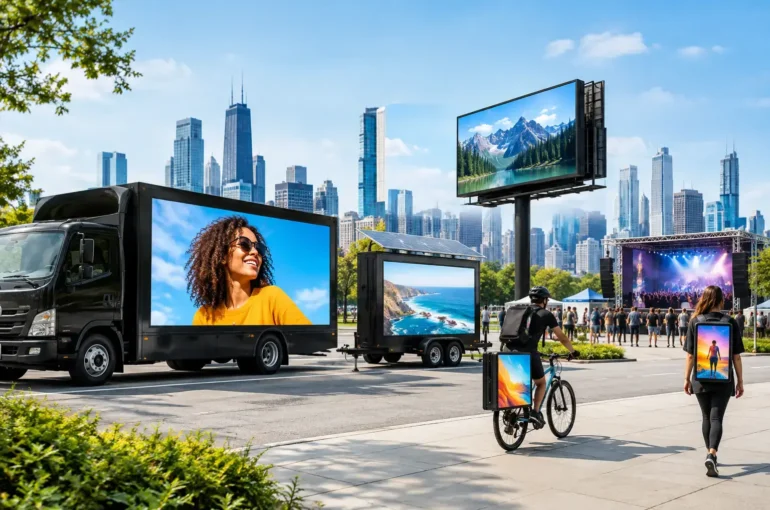
A busy precinct does not automatically make a strong campaign. The outdoor measurement trends that matter now help advertisers answer the harder question: who was actually in the area, how often could they see the message, and what happened around the campaign period?
For Australian brands and agencies, this shift is changing how out-of-home is planned. Reach still matters. Big screens, busy roads and event crowds still create impact. But the strongest mobile outdoor campaigns pair that physical visibility with a clear measurement plan from the start.
Outdoor measurement trends are getting more accountable
Out-of-home has always had a powerful advantage: people see it in the real world, on the way to work, at the shops, outside venues and in the streets where decisions are made. The limitation was proving that exposure with the same confidence expected of other channels.
That gap is closing. Better traffic data, audience modelling, mobile movement data, campaign reporting and independent methodologies are giving buyers a more detailed view of outdoor performance. The result is not a perfect one-to-one record of every person who looked at a screen or billboard. It is a more credible, practical picture of likely opportunity to see, audience delivery and campaign coverage.
That distinction matters. Outdoor measurement is not about pretending that every passing person read every word. It is about planning high-visibility exposure honestly, then using available data to improve where, when and how a campaign runs.
From traffic counts to audience-led planning
Traffic volume remains useful, particularly for roadside formats. A location with steady vehicle flow can deliver repeated exposure over a campaign period. Yet traffic alone does not show whether those vehicles contain the audience a brand needs, whether pedestrians are present, or whether the location is relevant to the campaign objective.
Audience-led planning adds another layer. It combines location, time of day and likely movement patterns to identify places where priority audiences are more likely to be. A property developer may want to reach commuters near growth corridors. A hospitality venue may care more about people within a short distance of its doors on Thursday through Sunday. An event promoter may need concentrated exposure around transport hubs, entertainment precincts and nearby retail areas in the days before gates open.
Mobile media is built for this approach. Rather than accepting the audience attached to one fixed site, campaign managers can schedule routes around high-value areas, change coverage by daypart and place screens where crowds are gathering. The creative remains visible, while the campaign moves closer to the people who matter.
Attention is becoming part of the conversation
An impression tells you a person had an opportunity to see an ad. It does not guarantee attention. That is why attention metrics are gaining ground in outdoor planning.
Attention can be informed by factors such as screen size, creative visibility, dwell time, viewing distance, traffic speed and the environment around the format. A message seen while vehicles crawl through a busy inner-city corridor has a different viewing context from one passed at highway speed. A digital screen beside an event entrance has a different role again, with people waiting, walking and often talking about what they are about to experience.
For advertisers, the practical takeaway is simple: match the format and creative to the viewing moment. Keep mobile billboard copy direct. Use strong contrast and a single clear message. Let event screens work harder with scheduling that supports the day’s program, sponsor commitments or time-sensitive offer. Measurement is only useful if it influences those decisions.
Frequency is moving beyond a single number
Repeated exposure is one of outdoor advertising’s strongest commercial advantages. People rarely act the first time they see a message. They notice it, recognise it later, then respond when the offer, location or need becomes relevant.
However, chasing frequency without control can waste budget. Seeing the same ad several times across a week may build familiarity. Seeing it repeatedly in the same narrow pocket, while missing nearby demand areas, can limit growth. The right frequency depends on campaign length, geography, creative complexity and purchase cycle.
A short retail launch may prioritise intense, local repetition. A national brand awareness campaign may need broad coverage across multiple cities, with enough route rotation to avoid concentrating delivery in one area. Event campaigns often need frequency to build sharply as the date gets closer, then a final burst around the venue.
Ask for reporting that shows where and when the campaign operated, not just a headline total. Route evidence, deployment times, location coverage and proof-of-posting imagery make campaign delivery easier to assess and easier to explain internally.
Location intelligence is making mobile media sharper
One of the most useful outdoor measurement trends is the move from broad geographic labels to location intelligence. “Sydney” is not one audience. Neither is Melbourne, Brisbane or any regional centre. Each contains distinct commuter routes, retail precincts, sporting venues, business districts and neighbourhood rhythms.
A location-responsive plan considers the specific moments that create value. For example, a gym opening may benefit from coverage near competing fitness centres, major supermarkets and commuter routes within its realistic catchment. A film release may need visibility near cinemas, university areas and weekend entertainment districts. A B2B campaign could focus on business parks, airport approaches and conference precincts.
This is where mobile formats earn their place in the media mix. They can support a fixed-site buy by filling gaps, amplifying key suburbs or following audience activity during a launch. They can also operate as the primary format when speed, flexibility and geographic control matter more than owning one permanent location.
Privacy and methodology still matter
More data does not automatically mean better data. Audience movement data is typically aggregated and modelled, not a personal record of an individual’s behaviour. Buyers should understand the methodology behind reported reach, impressions and audience segments before treating them as precise facts.
Four questions keep the discussion commercial and clear:
- What source data informs the estimate, and how current is it?
- Is the number an opportunity-to-see estimate, a verified delivery record or an attention-based measure?
- What assumptions have been made about visibility, travel patterns and audience composition?
- Can the supplier provide route, time and location evidence alongside the audience report?
There is a trade-off here. Highly granular reporting can look impressive, but it should not distract from campaign fundamentals. A clear message in the right place, delivered repeatedly at the right time, will outperform a complicated report attached to weak locations or forgettable creative.
Outdoor is being measured alongside other media
Outdoor no longer needs to be treated as an isolated awareness channel. Campaign teams increasingly compare exposure periods against website traffic, branded search, store visits, ticket sales, lead volumes and social activity. This does not mean every change can be claimed as the direct result of a billboard. Many factors influence a customer’s decision.
It does mean campaigns can be designed with a useful test in mind. Use a distinct landing page or offer code for a local push. Monitor search demand while a mobile billboard program is active. Compare sales or enquiry patterns in target areas against non-target areas where practical. Track event registrations before, during and after a street-level campaign.
The goal is directional evidence that helps make the next buy smarter. If a mobile route near selected retail precincts correlates with stronger local response, increase that coverage. If certain dayparts produce more enquiries, adjust deployment. Treat measurement as a planning tool, not a report that arrives after all the decisions are finished.
What this means for your next campaign
The best outdoor plans are becoming more deliberate, not more complicated. Start with the action you want to create: store visits, event attendance, brand recognition, enquiries or local market presence. Then identify the streets, precincts, venues and times where that action is most likely to begin.
Choose a format that suits the viewing environment. Build creative people can understand quickly. Set realistic reach and frequency expectations. Finally, agree on the delivery evidence and performance signals you will review before the first vehicle is on the road.
Mobile Outdoor Media helps brands take that thinking into public spaces, from local activations to coordinated multi-city campaigns. Put your message where audiences are already moving, measure what can be measured with confidence, and use the results to make the next route work even harder.