Click to Call

Relocatable Signage Versus Fixed Hoardings
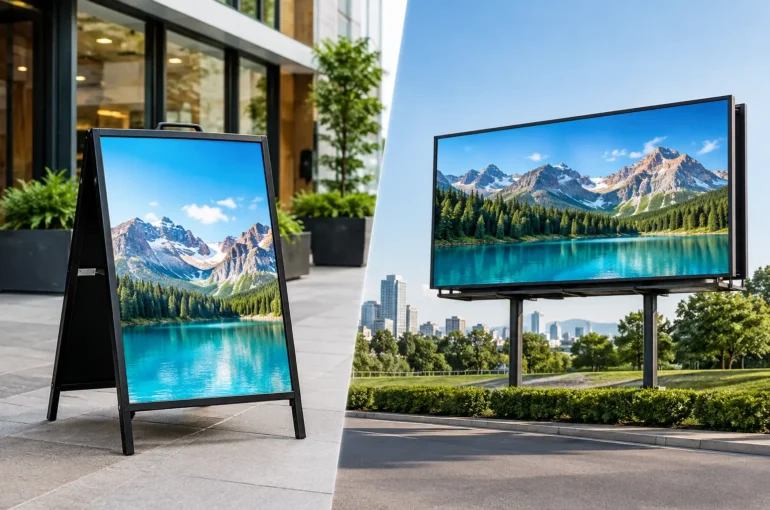
A prime roadside site can look like the obvious choice until your audience shifts two suburbs away, an event changes venue, or a new retail precinct starts pulling the foot traffic you need. The real decision in relocatable signage versus fixed hoardings is not simply which format is bigger. It is whether your campaign needs to own one location for the long haul or move with the people you want to reach.
For Australian brands, agencies and event teams, both formats can deliver strong street-level visibility. The right choice comes down to campaign duration, geographic priorities, approvals, budget structure and how quickly you need to react when conditions change.
What separates relocatable signage from fixed hoardings?
Relocatable signage is designed to be installed, displayed and moved to another approved site when the campaign, lease or audience opportunity changes. It is commonly used on private land, development sites, industrial corridors, retail approaches and high-traffic local routes where a brand wants substantial visibility without committing to a single long-term location.
Fixed hoardings are permanent or semi-permanent advertising structures attached to a defined site. They may sit on a building, construction perimeter, roadside structure or long-established billboard location. Once booked, the message remains tied to that location for the agreed period.
That difference changes the entire media strategy. A fixed hoarding asks, “Is this the right site?” Relocatable signage asks, “Where should the next site be?”
When fixed hoardings make commercial sense
Fixed hoardings are a strong choice when one location is genuinely the campaign. A developer promoting apartments beside a major construction project, a retailer dominating the approach to a shopping centre, or a venue building awareness in its immediate catchment can benefit from staying put.
The greatest advantage is consistency. Commuters see the same creative on the same route day after day. Over time, that repetition can build strong mental availability, particularly where the site has reliable traffic volumes and clear sightlines. A well-positioned fixed hoarding also gives a campaign a sense of permanence. It tells the market that your business belongs in that area.
Fixed sites can be easier to plan around when the campaign is long-term and the audience is stable. If you know the relevant shoppers, workers or residents pass a particular road every week, locking in that exposure can provide confidence and predictable delivery.
There are trade-offs. The site can become less effective if traffic patterns change, a competitor opens elsewhere, roadworks affect visibility or your campaign expands beyond the local area. Fixed inventory is also limited by what is available. The best location may already be booked, or it may come with a commitment that does not suit a short promotional window.
Why relocatable signage gives campaigns more control
Relocatable signage is built for advertisers that need options. Instead of relying on one address, you can position your message near new estates, retail centres, transport corridors, sports grounds, festival precincts or regional growth areas, subject to site availability and applicable approvals.
This matters when a campaign has a clear sequence. A new product launch might start near high-density commuter routes, then shift closer to retail zones during the purchase period. An event promoter can build early awareness across the wider catchment before moving closer to the venue as opening day approaches. A property campaign can follow buyer interest as new display villages and land releases open.
The format also gives campaign managers a practical response when a site is no longer doing its job. If the location loses relevance, you are not left watching budget sit on a structure that cannot move. You can review the audience, assess the next opportunity and reposition the asset around the campaign objective.
That flexibility does not mean relocatable signage is a shortcut around planning rules. Site suitability, landowner permission, council requirements, road safety considerations and approval pathways still matter. A quality supplier will assess these factors before installation, rather than treating mobility as a licence to place signage anywhere.
Relocatable signage versus fixed hoardings: compare the campaign fit
The best format depends on what you are trying to achieve, not which one sounds more impressive in a proposal.
Choose fixed hoardings when location ownership matters most
A fixed hoarding usually suits a campaign with a long lead time, a stable audience and a highly valuable local site. Think of a hospitality venue on a busy arterial road, a major development with a defined surrounding catchment, or an established brand seeking permanent prominence near its flagship location.
It is especially effective when the message has a long shelf life. Brand campaigns, project launches and evergreen service offers can benefit from months of repeated exposure in one high-value location. If the creative needs little change and the audience keeps passing the same site, fixed can be the efficient answer.
Choose relocatable signage when timing and territory matter most
Relocatable signage suits campaigns that need to react, expand or concentrate activity around changing audience hotspots. It is a practical option for multi-suburb promotions, new store openings, election activity, touring events, seasonal retail campaigns and property releases.
It can also make more sense for brands testing a market. Rather than committing all spend to one long-term placement, a campaign can activate in selected areas, monitor enquiries or foot traffic, then put more weight behind the locations producing the strongest response.
For national and multi-city activity, the advantage becomes even clearer. The core creative can remain consistent while the location strategy adapts to each city, region, venue schedule or local retail footprint. Mobile Outdoor Media works with this kind of campaign logic: get the message into the streets where the audience is concentrated, then keep the delivery coordinated across markets.
Cost is about commitment, not just the rate card
Comparing only the monthly hire cost can lead to the wrong decision. Fixed hoardings may involve a longer booking commitment, while relocatable signage can involve installation, relocation, site and production considerations that vary by campaign. Neither is automatically cheaper.
The better question is: how much value will you get from every week that the sign is live? A lower-priced fixed site is poor value if it is outside your active customer area. A relocatable sign may cost more to reposition, but still deliver a better result if it moves from a broad awareness zone to a high-intent location at the right time.
Production should also be considered. If you expect regular creative updates, short bursts or campaign phases, plan artwork and changeover requirements early. Clear, high-contrast creative with a simple message, strong branding and a visible call to action usually performs better than a crowded design, regardless of the structure beneath it.
Build the decision around audience movement
Before booking either format, map where your audience actually travels. Look beyond broad suburb labels. Consider commuter routes, retail approaches, school-run traffic, business precincts, venue entry points, weekend activity and the roads people use to reach competing businesses.
Then match the media to the campaign window. A six-month awareness push may justify a fixed hoarding on a proven route. A four-week promotion around multiple locations may need relocatable signage, mobile billboards or event screens that can follow the action.
It also pays to define what success looks like before the installation date. If the objective is local recognition, measure reach and repeat exposure. If it is store traffic, bookings or enquiries, make the offer easy to act on and ensure your team can track the response by location or period. Outdoor media is strongest when placement, message and operational follow-up are working together.
Make your signage work harder
Do not choose a fixed hoarding simply because it is familiar, and do not choose relocatable signage simply because it moves. Choose the format that puts your message in front of the right people at the moment your campaign needs them most.
If your market is stable, own the location. If your audience, offer or opportunity is moving, put your signage where the action is and keep it moving with purpose.