Click to Call
Relocatable Billboard Hire That Owns the Location
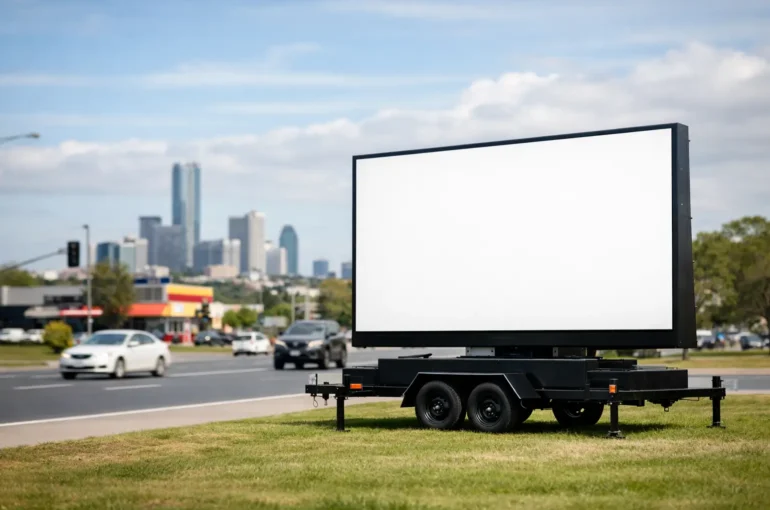
A vacant block beside a packed retail precinct, the approach road to a major event, or a high-traffic suburban intersection can become your next big advertising asset. Relocatable billboard hire puts a large-format brand message where people are already moving, shopping, commuting and making decisions – without locking your campaign into a permanent site.
For businesses, agencies and event teams, that flexibility matters. You can build visibility around a new store opening, shift focus between growth areas, support an event burst, or maintain a strong local presence while other media comes and goes. The objective is simple: put the right message in the right location often enough to be remembered.
What relocatable billboard hire gives your campaign
A relocatable billboard is a substantial outdoor display designed to be installed at an approved site and moved when campaign priorities change. Unlike a fixed billboard bought or leased as a long-term commitment, it gives advertisers greater control over where their campaign appears and how long it stays there.
That makes it a practical format for campaigns that need more than broad reach. A property developer can use one to command attention near a sales office or development corridor. A retailer can build local awareness around a new location. A promoter can create a visible arrival message near an entertainment precinct. A national brand can roll the same creative through selected markets while keeping production and campaign management consistent.
The real advantage is not movement for movement’s sake. It is the ability to place your message close to the audience, moment and geography that matter. A well-positioned relocatable billboard can work day and night, creating repeated exposure for drivers, passengers, pedestrians and nearby shoppers.
Choose location before creative
Big outdoor creative gets attention, but the site does much of the heavy lifting. Before booking relocatable billboard hire, start with the commercial outcome you need from the campaign. Are you driving foot traffic, launching in a specific suburb, creating event awareness, supporting a sales period or defending share in a competitive local market?
Once the objective is clear, assess the audience flow around potential locations. Look at vehicle volume, approach direction, sightlines, dwell time, nearby retail, public transport access and the kinds of people using the area. A sign near a congested road can generate repeated viewing, while a site near a venue may deliver a concentrated burst of attention before and after an event.
There is always a trade-off. A premium arterial location may provide broad exposure but less relevance if your customer base is highly local. A site close to your business may be ideal for conversion but have lower overall traffic. The strongest campaign is not automatically the one with the biggest road count. It is the one that reaches the people most likely to act.
Make the message readable at a glance
Relocatable billboards are not brochures. People need to understand the message in seconds, often while moving. Use one dominant visual idea, a short headline, high-contrast colour and a clear brand presence. If there is a call to action, make it direct and easy to absorb.
Trying to include every feature, offer and product line usually weakens the result. Outdoor advertising rewards confidence. Lead with the product, benefit or offer that will make someone look twice, then let your website, store team or wider media activity provide the detail.
For local campaigns, location-specific creative can lift relevance. A line that speaks to a suburb, event audience or nearby need can feel more immediate than a generic national execution. For multi-city campaigns, retain the central campaign idea while adapting practical details such as local store information, dates or venue messaging.
When a relocatable billboard is the right format
This format works best when your campaign needs a visible physical presence over days, weeks or months in a defined area. It is particularly effective where permanent billboard supply is limited, where a site becomes strategically valuable for a finite period, or where campaign priorities may change during the year.
Retail and hospitality operators can use it to announce openings, seasonal offers and major trading periods. Property campaigns can establish presence around development sites, display villages and growth corridors. Event organisers can use it to create anticipation along key travel routes. Community campaigns and sporting organisations can build recognition near grounds, centres and gathering points.
It can also work alongside mobile advertising. A relocatable billboard gives a campaign a strong local anchor, while mobile billboards, bike boards or walking boards take the message through surrounding streets, shopping zones and event crowds. One format establishes a consistent landmark. The other takes the campaign closer to audiences throughout the day.
The format may be less suitable if your priority is changing several locations daily or targeting narrow time windows. In those cases, a digital mobile billboard or event screen may offer more tactical flexibility. Match the format to the job rather than forcing every campaign into the same media plan.
Plan the site, permissions and timing properly
Outdoor advertising is most effective when the operational work is handled early. Every potential site needs to be assessed for access, placement, viewing angles, safety and the approvals that apply. Requirements can vary by council area, landowner arrangements and the nature of the display, so do not assume a visible patch of land is automatically available for advertising.
Start site conversations before the campaign launch date, especially when your activity is tied to an event, construction milestone, retail opening or major promotional period. The best locations can require coordination with site owners, local authorities and production schedules. Early planning gives you more options and reduces the risk of settling for a location that is merely available rather than commercially valuable.
Artwork production should also be considered from the start. Large-format print exposes every weak image, tiny line of text and cluttered layout. Supply artwork at the required dimensions and resolution, use approved brand assets, and allow enough lead time for checks and production. A campaign partner that manages production can help keep the result sharp, consistent and ready for installation.
At Mobile Outdoor Media, the focus is on taking brand messages into the streets with practical national coordination and local execution. Whether the campaign is for one location or multiple Australian markets, the planning should stay centred on audience movement, visibility and commercial purpose.
Build repetition, not just a one-off impression
Outdoor advertising earns its value through repeat exposure. Someone may notice your billboard on Monday, recognise the offer on Wednesday and act after seeing it again on the weekend. That is why campaign duration, site position and message consistency all matter.
Give the display enough time to become familiar in the local environment. A short burst can be powerful around a tightly timed event or sale, but a longer placement may be more effective for brand building, property activity or a new business establishing itself in an area. There is no universal booking length. It depends on traffic patterns, audience frequency, budget and how quickly the message needs to work.
Support the billboard with activity that makes the next step easy. Coordinate the same offer across social media, radio, local activations, direct mail or in-store signage where appropriate. The outdoor display should not carry every job alone. Its role is to create presence, recognition and momentum in public space.
Measure against the outcome that matters
Do not judge a relocatable billboard only by whether people say they saw it. Set a clear success measure before the campaign goes live. That might be store visits, enquiry volume, event registrations, sales during a promotional period, branded search activity or traffic to a dedicated campaign page.
Use practical signals. Compare activity before, during and after the placement. Ask new customers how they heard about you. Give the outdoor offer a distinct code or memorable phrase where it suits the campaign. For site-based businesses, track changes in walk-ins and local enquiry patterns. These measures will not capture every impression, but they will show whether the campaign is moving commercial results.
A relocatable billboard is strongest when it becomes part of the local landscape at exactly the moment your market needs to see you. Pick the site with purpose, keep the message bold, allow enough time for repetition, and make every passing glance count.