Click to Call


Experiential Marketing Trends Taking to the Streets
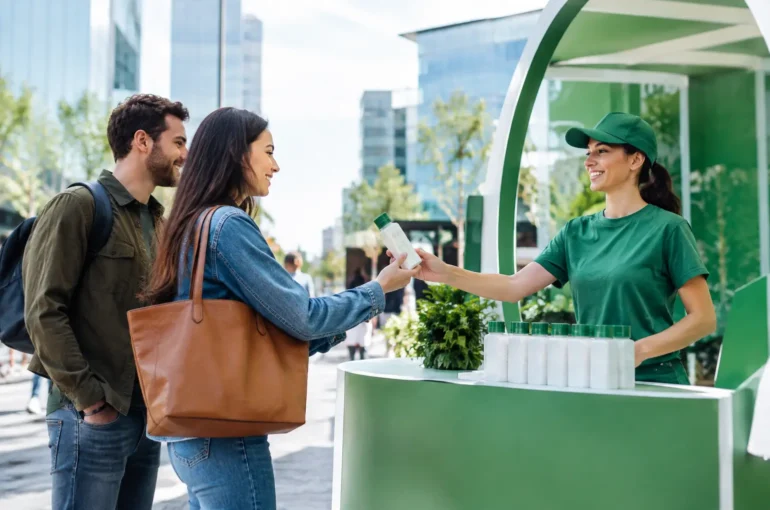
A packed event precinct, a launch-day queue or a busy retail strip gives brands something a scroll cannot: a real chance to be noticed, remembered and talked about. The strongest experiential marketing trends are not about adding more gimmicks. They are about putting useful, visible and shareable brand moments where people already gather.
For Australian marketers, that means taking activation beyond the stand, booth or branded backdrop. It means building a campaign that moves through the streets, reaches the right suburb, supports the event crowd and keeps working before and after the main moment.
Experiential marketing trends are becoming more mobile
Fixed activations still have their place. A well-chosen shopping centre, stadium forecourt or festival site can put a brand in front of a concentrated audience. But a fixed site only captures the people who pass that exact point. Mobile experiential media changes the equation.
Digital mobile billboards, bike boards, walking boards and event screens can carry a campaign to the audience, rather than waiting for the audience to find it. They can build anticipation around a venue, direct people to a pop-up, promote a limited offer across busy precincts or extend an activation into nearby streets where foot traffic is already moving.
This is especially useful when the campaign has a tight window. A product release, property launch, ticketed event or retail promotion may only have days to make an impact. Mobile formats create repeated exposure across multiple high-traffic locations in one day, helping the message feel present across a whole area rather than confined to one footprint.
The practical benefit is control. Route around commuter corridors in the morning, retail areas at lunchtime and entertainment precincts in the afternoon. Put screens near the event when queues form. Move closer to hospitality zones when the crowd shifts. This is location-responsive advertising with a clear job to do.
The best experiences earn attention before asking for action
People do not attend an event or walk through a precinct hoping to complete a marketing funnel. They are there to shop, commute, meet friends, watch sport or have a good time. A brand experience has to respect that reality.
The campaigns getting cut-through tend to offer one of three things: entertainment, convenience or a reason to participate. It could be a live screen displaying fan content, a product sampling point supported by street-level promotion, a competition that rewards a quick interaction or a clear offer that can be redeemed nearby.
The experience does not need to be huge to be effective. In fact, oversized concepts can waste budget if there is no simple reason for people to stop. A bold mobile screen carrying a sharp creative message, paired with a clear call to visit a nearby activation, can outperform an expensive installation hidden inside a low-traffic venue.
Start with the audience behaviour. Are people passing quickly, waiting in a queue, spending time with mates or travelling between locations? A commuter audience needs fast, readable messaging. An event crowd may respond to live content and social proof. A retail precinct audience may act on a timely offer. Match the format and creative to the pace of the environment.
Live content is replacing set-and-forget creative
Static campaign creative remains valuable when the message is simple: a new store is open, tickets are on sale, a product is available now. Yet one of the most useful experiential marketing trends is the shift towards content that responds to the moment.
Event screens give brands room to display schedules, countdowns, crowd messages, competition results, event information and live social content. Digital mobile billboards can rotate offers by location, daypart or audience. This makes the campaign feel current, not copied and pasted from a standard media plan.
There is a trade-off. Live content needs planning. Someone must approve messages, supply assets in the correct specifications and make decisions quickly when conditions change. Do not add dynamic content merely because it is possible. Use it when it improves the audience experience or gives people a reason to look again.
For example, a sports partner could use mobile screens to build momentum on approach roads, then switch to venue-specific messaging once fans arrive. A food brand could promote a sampling location in the morning, change to a retailer offer at lunch and reinforce the call to purchase near supermarkets later in the day. One campaign, several purposeful moments.
Make participation easy
A QR code can support an activation, but it is not the activation. If scanning is the only thing a person can do, the campaign needs a strong value exchange. Give them early access, a prize entry, a local offer, useful event information or something entertaining enough to justify the pause.
Keep the instruction immediate. The audience should understand what is happening from several metres away. Use large type, minimal copy and one clear next step. Mobile outdoor media has a short window to land the message, particularly in traffic or dense pedestrian areas.
Local relevance matters more than broad reach alone
National campaigns need consistency, but they should not feel generic. A campaign running in Brisbane, Sydney, Melbourne, Perth, Adelaide or regional centres can retain the same core creative while adapting its route, timing and activation cues to local conditions.
That might mean targeting beachside foot traffic on the Gold Coast, commuter movement near a CBD rail corridor, a university precinct during semester or a regional event that draws people from surrounding towns. The objective is not simply to be seen everywhere. It is to be seen in the places that matter to the campaign.
This is where mobile and event-based formats give planners a genuine advantage over fixed inventory. A route can be built around store locations, competing venues, transport hubs, major events and known foot-traffic peaks. It can also be adjusted if weather, road access or an event schedule changes. Flexibility is valuable, but only when it is tied to a clear audience plan.
For multi-city activity, central coordination is equally important. Brands and agencies need consistent production quality, agreed artwork specifications, reliable scheduling and local delivery without chasing separate suppliers in every market. The public should see one campaign, not a patchwork of different executions.
Measure the response, not just the spectacle
A full crowd and a stream of social posts can look impressive, but campaign teams still need to know what the experience achieved. The right measurement depends on the objective.
For a retail campaign, track store visits, offer redemptions and sales movement during the activity. For an event, look at attendance, queue traffic, registrations and content engagement. For a brand launch, measure reach estimates alongside search lift, direct traffic, social mentions and post-campaign recall. Where possible, use unique codes or location-specific landing pages to compare results by route or city.
Do not judge a street-level campaign by a single metric. A mobile billboard may create awareness before an event, provide wayfinding during it and reinforce a retail offer afterwards. Its value sits across the customer journey. Set the measures upfront so the creative, route and call to action all work towards the same result.
Build the campaign around the moment people will remember
The next wave of experiential work will reward brands that show up with purpose. Audiences are selective, public spaces are busy and attention is earned in seconds. The answer is not to make every campaign louder. It is to make it more relevant, more visible and easier to act on.
Use mobile media to announce the moment, direct people towards it and keep your brand in view when the crowd moves on. Mobile Outdoor Media helps campaigns take that presence into the streets, across event precincts and into the locations where attention is already waiting. Plan the route, sharpen the message and give people a reason to remember what they saw.