Click to Call
How Do Mobile Billboards Work on Australian Roads?
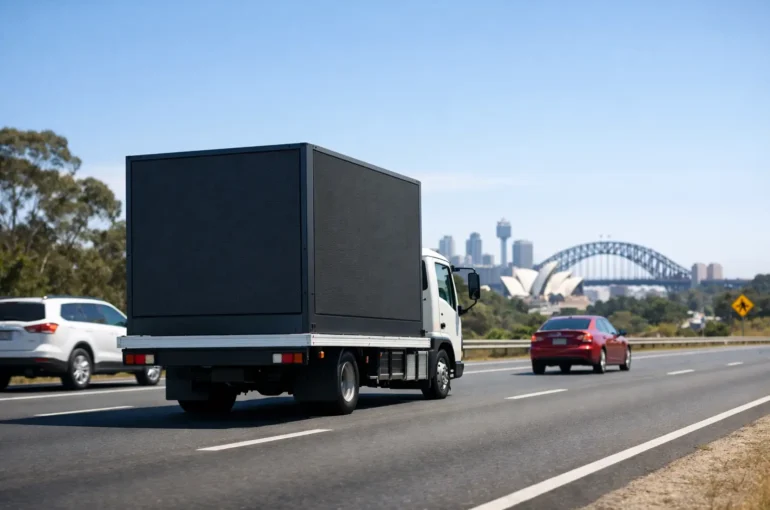
A fixed billboard waits for the right people to pass it. A mobile billboard puts your message on the move, taking it into retail precincts, commuter corridors, entertainment districts and event crowds. So, how do mobile billboards work? A branded vehicle or purpose-built display unit follows a planned route or remains positioned in a high-value area, delivering large-format advertising where your audience is already spending time.
For brands that need more than a single roadside location, that movement is the advantage. You can build repeat exposure across a suburb, concentrate activity around a launch, or run one consistent campaign across several Australian cities.
How do mobile billboards work in practice?
A campaign starts with a clear job: drive awareness, support a retail opening, promote an event, build property enquiry, reinforce a sale or put a brand in front of commuters. From there, the format, artwork, locations and campaign hours are selected to match the audience.
Conventional mobile billboards typically use high-impact printed panels fitted to a truck or trailer. They are especially effective for strong, simple messaging that must be visible in daylight, at speed and from a distance. Digital mobile billboards use LED screens to display static artwork, animated creative or a sequence of approved ads. This gives campaigns more flexibility, including daypart messaging and timely creative swaps where production schedules allow.
The vehicle is then deployed to agreed areas. It may travel a programmed route through busy streets and commercial centres, circulate near transport hubs, or work around a venue before and after a major event. It can also be stationed where conditions and local rules permit, creating a prominent visual presence without relying on one permanent site.
That is the core difference from fixed outdoor media. Rather than buying the audience attached to a single structure, you plan the audience, times and locations your mobile display will reach.
Route planning turns movement into media value
A vehicle driving without a purpose is just traffic. A well-planned mobile billboard campaign is built around audience concentration and repetition.
For a weekday business campaign, that might mean morning commuter periods near arterial roads, lunchtime activity around office precincts and afternoon exposure near retail destinations. For a concert, sporting fixture or festival, the focus may shift to approaches to the venue, nearby hospitality strips and post-event transport routes. A new store opening can benefit from repeated passes around the local catchment rather than broad citywide coverage.
Route planning should account for more than a map pin. Traffic speed matters because slower-moving environments can create longer viewing opportunities. Pedestrian density matters for footpath-facing formats. Visibility, vehicle access, road restrictions, school zones, loading areas and local parking conditions can all affect the final plan.
There is a trade-off. A broad route can introduce the campaign to more neighbourhoods, while a tighter route can build stronger frequency among the people most likely to act. The right choice depends on whether your priority is reach, local ownership or event-day impact.
The format shapes what your audience sees
Mobile advertising is not one product. The best format depends on the job, the creative and the environment.
Digital mobile billboards are built for flexibility. A campaign can use multiple messages across a day, run short motion graphics, promote time-sensitive offers or provide event information. Bright screens can be highly visible into the evening, but creative still needs to be simple enough to understand at a glance.
Conventional mobile billboards bring bold, constant visibility. There is no rotation between messages, so every passer-by sees the same campaign statement. This makes them a strong choice for a major brand visual, a product launch or a direct local promotion.
Solar ad trailers and relocatable billboards can hold a location for longer periods where appropriate. They suit sites where stationary presence matters, such as near retail areas, building developments, community events or high-traffic approaches. Event screens add another role: they can deliver advertising, schedules, announcements and live event content where crowds gather.
For dense precincts, digital bike boards, bike boards and walking boards place the message at street level. They move through laneways, malls, nightlife areas and event queues where a large vehicle may not be the practical option. A national campaign may combine formats, using trucks for scale in one market and walking boards for close-range engagement at a local activation.
Artwork has one job: get noticed and understood fast
Outdoor creative is not a brochure. People often see it while walking, driving, waiting at lights or moving through a crowd. The message needs to land quickly.
Start with one primary idea. A recognisable logo, a strong visual, a short headline and a direct action usually outperform a crowded layout. If the audience needs a web address, phone number, QR code or offer detail, make it secondary and make sure it is large enough to be read in the real world.
Digital screens allow animation, but motion should support the message rather than bury it. Fast cuts, small copy and excessive frames can reduce clarity. Printed panels need artwork supplied to the right specifications so colours, images and type remain crisp at large scale.
Ask a simple question before approving creative: could someone understand the advertiser and the offer in three seconds? If not, remove the clutter. Mobile Outdoor Media can coordinate production requirements alongside the media plan, helping keep the artwork practical for the display format.
Timing determines who sees the campaign
Mobile billboards can operate when the audience is most available. That makes timing a strategic lever, not an afterthought.
A hospitality promotion may perform best around lunch, after-work and weekend entertainment periods. A recruitment message can work around industrial areas at shift changes. Property campaigns may target weekend shopping precincts and routes near display homes. An event promoter may build awareness in the days before a show, then concentrate activity near the venue on the day.
Digital formats can take this further with different creative by time of day. A breakfast offer can run in the morning, a lunch message at midday and a dinner call-to-action in the evening. It is still one campaign, but it is better matched to the moment people see it.
Plan enough days and hours to create meaningful repetition. One high-profile pass can generate excitement, particularly at an event, but repeated exposure is what helps a brand stay top of mind. The required frequency depends on the market, budget, route size and how familiar the audience is with your brand.
What happens during campaign delivery?
Before launch, the campaign team confirms the selected format, artwork, dates, operating hours and planned locations. Printed creative is produced and installed, or digital files are checked and scheduled for screen playback. Drivers and operators work to the campaign plan while responding to real conditions such as traffic, weather, roadworks and access restrictions.
This is where local experience matters. A route may need practical adjustments on the day, but the purpose remains the same: keep the display visible in the agreed target environment. For campaigns across multiple cities, central coordination helps maintain consistent creative and reporting while local operators manage the streets on the ground.
After or during a campaign, reporting can document operational activity, including locations, hours and photographic evidence where arranged. This provides accountability, particularly for agencies and multi-site brands managing several media channels.
Mobile billboard results should be judged against the campaign objective. Awareness campaigns may look at visibility, frequency and geographic coverage. Retail campaigns can compare activity periods with store traffic or sales. Event campaigns can track ticket interest, search activity, promotional codes or on-site response. No outdoor format can promise that every person who sees an ad will act, but a disciplined route and timing plan gives the campaign a far better chance of reaching the right people repeatedly.
When mobile billboards make the most sense
Mobile media is particularly effective when location matters and a fixed site cannot provide enough flexibility. It suits businesses entering a new market, brands with offers tied to particular precincts, organisers building event buzz and agencies needing one supplier across several Australian markets.
It may be less suitable if your message requires detailed explanation or if your audience is very narrow and difficult to reach in public spaces. In those cases, use mobile billboards as the high-visibility layer alongside more detailed digital, direct or on-site communications.
The strongest campaigns do not try to be everywhere. They choose the streets, suburbs, venues and times that matter, then show up with a message people can remember. Put the plan behind the wheels, keep the creative sharp and take your campaign directly to the crowd.
Related reading: Mobile Billboard Advertising Regulations in Australia
Wondering what a run would look like for your brand? Book a campaign.