Click to Call

Mobile Billboard Advertising Regulations in Australia
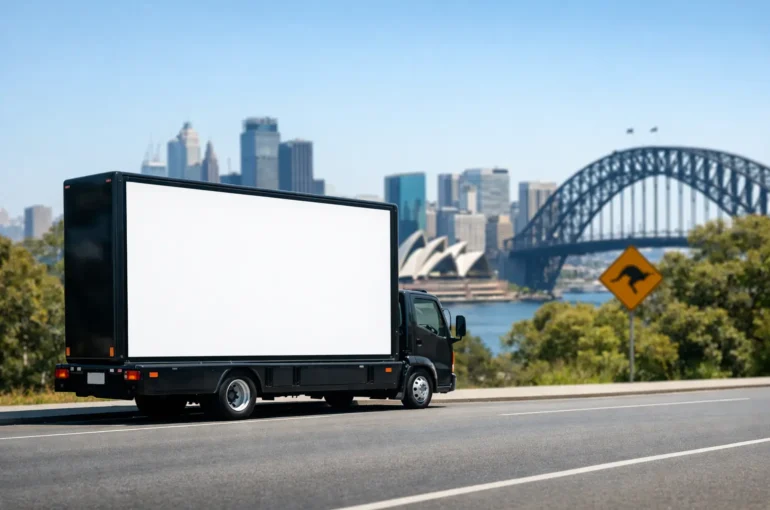
A mobile billboard can put your campaign beside a packed stadium, outside a retail precinct or along a commuter route on the same day. That flexibility is the advantage – and the reason mobile billboard advertising regulations need to be planned before wheels start rolling. In Australia, the rules can change between states, councils, roads and event sites. A great creative idea still needs the right route, operating plan and approvals behind it.
Mobile billboard advertising regulations: what changes?
There is no single national rulebook covering every mobile billboard campaign. Road laws are generally managed at state or territory level, while councils control many local advertising, parking and public-space requirements. Private venues, shopping centres, event organisers and landowners can add another layer of conditions.
The first question is not simply, “Can this vehicle carry advertising?” It is: where will it travel, where will it stop, how long will it remain there, what does the display show, and who controls the land or road? A conventional billboard truck circling a planned route is assessed differently from a digital vehicle stationed near a venue. A relocatable billboard positioned on private land may also trigger planning or signage requirements that do not apply to a moving vehicle.
This is why a campaign that works cleanly in Brisbane may need a different deployment plan in Sydney, Melbourne, Perth or a regional centre. National reach is achievable, but it needs local knowledge rather than a one-size-fits-all route sheet.
Start with the format and how it will operate
Your campaign format sets the compliance conversation. Mobile billboard trucks, digital mobile billboards, bike boards, walking boards, solar trailers and event screens all place advertising in public view, but they do not operate in the same way.
A vehicle that is genuinely moving as part of a campaign is often treated differently from one that parks for long periods in a high-traffic area. Councils may take a closer interest where a unit appears to function as a stationary sign, particularly if it occupies public parking, a verge, a roadside area or a location near a shopping strip. The longer it stays in one place, the more likely local parking controls, signage policies or permit conditions will matter.
Digital displays add their own considerations. Screen brightness, changing imagery, animation and night operation can affect whether a display creates a distraction for motorists. Static creative with timed changes may be suitable in one setting, while fast movement, high brightness or frequent transitions may not be. The sensible approach is to tailor screen settings to the environment, especially near intersections, pedestrian crossings, major arterial roads and transport corridors.
Event screens and trailers are also commonly subject to site-specific rules. An organiser may set requirements for placement, operating hours, power, access paths, crowd safety, audio and pack-down. Secure the site agreement early so your screen supports the event rather than becoming a last-minute operational problem.
Roads, parking and public land need separate checks
A mobile advertising unit must obey the same road rules as every other road user. That includes legal parking, safe loading, required vehicle registration, driver licensing and compliance with vehicle dimensions, lighting and visibility requirements. Advertising does not create an exemption from stopping zones, clearways, bus lanes, loading areas or traffic restrictions.
Routes should be selected for more than audience volume. Check whether the planned streets have access restrictions, height limits, time-based controls, construction zones or special event closures. In busy CBDs, a campaign can lose valuable exposure if the driver is forced off-route by rules that were visible in advance.
Public land is another common pressure point. Footpaths, parks, foreshores, plazas and council-managed car parks may require written permission for promotional activity, especially where staff, boards or screens are stationary. Walking boards and bike boards can be highly effective around retail and entertainment precincts, but operators still need to keep pedestrian paths clear and follow local rules for activations, distributing material or commercial activity in public spaces.
Private land is not automatically approval-free. A property owner can permit access, but local planning controls may still apply to a trailer, temporary sign or display that is visible from the road. Confirm both sides: permission from the owner and any relevant local requirements.
Keep the message visible without creating a safety issue
The strongest mobile creative is usually simple enough to read in seconds. That is good advertising practice and good risk management. A large brand mark, a short offer, a clear visual and a memorable call to action give audiences time to take in the message without forcing attention away from the road.
Avoid creative that could reasonably be mistaken for a traffic sign, emergency message or official direction. Be cautious with flashing treatments, urgent commands and designs that resemble road-control colours or symbols. If the campaign includes a QR code, keep it as a secondary response option for passengers and pedestrians, not the only way the message works.
Content still has to meet general advertising standards. Claims should be accurate, promotions should include material conditions where needed, and regulated categories such as alcohol, gambling, therapeutic goods and political advertising can have additional requirements. The billboard is mobile, but the obligations attached to the message travel with it.
Digital screen settings deserve a pre-launch test
For digital mobile billboards, set operating standards before the campaign goes live. Review brightness in daylight and after dark, establish sensible creative dwell times, and make sure remote content changes are controlled. A rushed update sent during a live campaign can create an avoidable compliance issue if it introduces prohibited imagery, a misleading price or an unsuitable animation.
Test the display from normal viewing distances, not just from a laptop. What looks restrained in the studio can appear much brighter from across a road at night. The goal is high-impact visibility that works with the street environment.
Build approvals into the campaign timeline
Compliance is easiest when it is part of media planning, not a task left until artwork is final. Start by mapping the campaign footprint: the cities, target streets, dates, hours, venue sites and likely dwell locations. Then identify whether the activity involves moving vehicles, stationary units, public land, private land or an organised event.
For campaigns with multiple moving parts, prepare a simple operations file that includes:
- planned routes and alternate routes for road closures or congestion
- site contacts, property permissions and event organiser approvals
- vehicle, trailer and display specifications
- creative files, digital screen settings and content sign-off
- driver or crew instructions covering parking, safety and escalation contacts.
This does more than reduce compliance risk. It keeps the campaign delivering. Drivers know where they can operate, crews can respond quickly to changed conditions, and the client has a clear record of how the activity will be managed.
Allow extra lead time for major events, city-centre activations and campaigns that involve several councils. Peak periods can bring road closures, restricted access and competing demands for public-space permits. Early planning gives you more options for premium locations and avoids paying for a unit that cannot reach the audience when it matters.
Choose a partner that plans for the street
Mobile media is not static outdoor bought from a map. It is a live campaign operating among traffic, crowds, venues, weather and changing local conditions. The best results come from matching the format to the location: a digital truck for a high-frequency city route, a solar trailer for a permitted site, bike boards for a pedestrian precinct, or an event screen where people are already gathered.
Mobile Outdoor Media coordinates campaigns across Australia with the local operational knowledge needed to make that flexibility practical. Before booking inventory, be clear on your audience, location, operating hours and whether you need movement, a fixed presence or event-based impact. Those decisions shape the approvals pathway as much as they shape reach.
Regulations are not there to blunt a bold campaign. They are the framework that lets your message stay visible, safe and active in the places your audience already moves. Plan them early, then take your brand to the streets with confidence.
Related reading: How Do Mobile Billboards Work on Australian Roads?
We handle compliance on every run. Ask us about your campaign.