Click to Call

Mobile Billboard Route Planning That Gets Seen
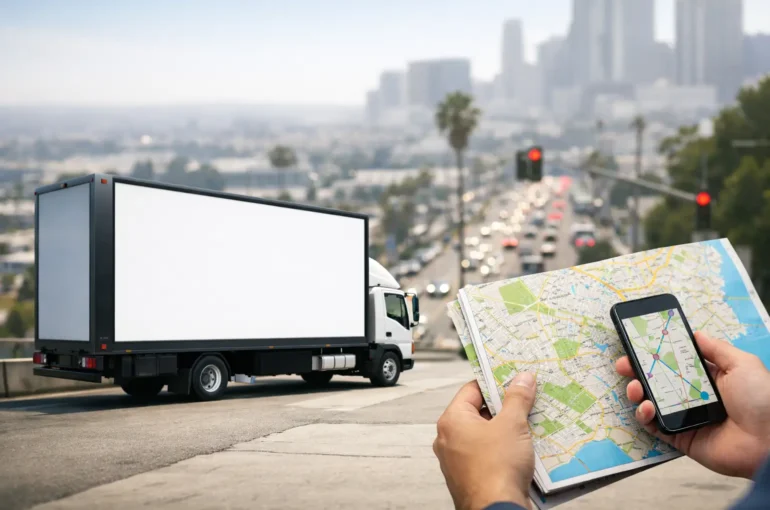
A mobile billboard only works as hard as the streets it travels. Put it on an empty arterial road at the wrong hour and even a great creative can miss its mark. Put it beside commuter queues, retail precincts, stadium approaches or a packed event entrance, and the message earns repeated, real-world attention. That is why mobile billboard route planning belongs at the centre of the campaign, not at the end of it.
The goal is not to clock up kilometres. It is to put your brand in the right places, often enough, when people are most likely to notice, remember and act.
Start With the Audience, Not the Map
The strongest routes begin with a clear answer to one question: who needs to see this campaign? A local hospitality venue may need office workers leaving the CBD and people moving through nearby entertainment precincts. A property developer may need to build awareness around growth corridors, display villages and high-traffic retail centres. A national retail promotion may need matching activity in several capital cities, with local route adjustments that reflect how each city moves.
Define the audience by location and behaviour. Consider where they work, shop, commute, socialise and attend events. Then identify the streets, precincts and transport connections that bring those people together.
Broad reach still has a place. A high-impact vehicle travelling across busy city roads can generate visibility well beyond a single postcode. But a route with no geographic purpose can dilute the spend. Targeted movement gives a mobile campaign its commercial edge: the ability to take the message to the audience rather than waiting for the audience to pass a fixed sign.
Build Routes Around Real Daily Patterns
Traffic volume matters, but it is only one part of the decision. A road can be busy with fast-moving vehicles that offer limited viewing time. Another location may have slower traffic, pedestrian activity, café seating, bus stops and long signal waits. For a bold brand message, both environments can work, but for different reasons.
Plan around the rhythm of the day. Morning and afternoon peak periods suit commuter-focused campaigns. Midday activity can be valuable near shopping districts, university areas, business centres and tourist locations. Evening routes are particularly effective around dining strips, live entertainment venues, stadiums and major events.
Think about dwell time as well as movement. A vehicle paused at lights, crawling through a busy retail street or circling a venue precinct has more opportunity to be seen than one passing at motorway speed. Digital mobile billboards can also rotate timely creative – such as a lunch offer at midday, an event reminder before gates open, or a late-night promotion near entertainment areas.
Route planning should account for the days that matter too. A weekday CBD route may be ideal for a corporate service, while weekends could be stronger for a retail launch, community event or family attraction. Public holidays, school holidays, sporting fixtures, festivals and local market days can all change where crowds gather.
Match the Route to the Campaign Objective
There is no single best route. The right plan depends on what the campaign needs to achieve.
For a brand awareness campaign, build coverage across multiple high-traffic precincts and repeat the route over several days. Familiarity grows when people see the same message on their way to work, at lunch and again on the trip home.
For retail activation, concentrate activity around the store catchment, competing retail areas and key approach roads. A route can create a visible bridge between where people are and where you want them to go. If a promotion is time-sensitive, schedule the highest-impact runs shortly before the purchase window.
For events, precision matters even more. Reach people on routes into the venue, around nearby transport hubs and in surrounding entertainment areas. Keep the unit active before, during and after the event where practical. Pre-event activity builds anticipation, while post-event exposure can reinforce sponsors, offers or the next date.
Property, recruitment and political campaigns often benefit from suburb-level focus. In these cases, repeat presence across selected local streets can be more valuable than attempting to cover an entire metro area in one day. Own the relevant locations first, then expand.
Use Frequency Without Wasting Movement
One sighting can make an impression. Several sightings make the campaign feel established. Route frequency is one of the major advantages of mobile outdoor advertising, but it needs to be deliberate.
A practical plan uses repeat loops through priority areas while allowing enough variety to broaden reach. Running the same few blocks all day may overserve one audience. Covering every corner of a city once may make the campaign forgettable. The balance sits between concentrated exposure and meaningful scale.
For shorter campaigns, focus on fewer locations and stronger repetition. For multi-week activity, rotate precincts, dayparts and local areas while keeping the campaign anchored to its main audience zones. A national campaign can follow the same strategic framework in Brisbane, Sydney, Melbourne, Perth, Adelaide, Canberra, Hobart and regional markets, without pretending every city behaves the same way.
Plan for Creative Visibility on the Street
Route and artwork are connected. Before selecting every road and precinct, consider what the audience must take in at a glance. Mobile billboard creative should be bold, uncluttered and legible from a distance. The route then needs to provide enough viewing opportunity for that message to land.
If the campaign has a short, high-impact line and a recognisable logo, it can perform well in faster traffic environments. If it includes an offer, event date, location or call to action, favour slower precincts, congestion points and places with pedestrian traffic. Keep essential information large. A moving billboard does not get the luxury of a long read.
Digital displays add flexibility, but they do not remove the need for discipline. Avoid cramming each frame with competing messages. Use the ability to schedule creative by time or location where it supports the campaign objective. A screen can work harder when the message reflects what people are doing nearby.
Check the Operational Details Early
A route plan must be ambitious and workable. Road conditions, access restrictions, traffic management, weather, event closures and local operating requirements can all affect the final schedule. Planning early gives the campaign team room to protect priority locations and create sensible alternatives.
Build contingency into event and high-traffic routes. A road closure should not leave the vehicle without a purpose. Identify nearby streets, secondary precincts and alternative approach roads that still reach the intended audience. This is especially valuable during major sporting events, concerts and city activations where conditions can change quickly.
Campaign duration also affects what is possible. A one-day launch needs a tight, high-density route. A two-week campaign can test different precincts and distribute exposure more broadly. Budget, vehicle format and geographic spread will shape the plan, so be clear about the priority: maximum reach, local ownership, event impact, retail visitation or repeated exposure.
Measure What Matters to the Campaign
Mobile outdoor advertising is a visibility medium, so measurement should reflect the outcome you want. For awareness activity, look at route coverage, time in priority zones, estimated audience opportunity and campaign consistency. For direct-response campaigns, use a memorable offer, campaign-specific landing page, code or location-based uplift alongside the outdoor activity.
Do not judge the campaign only by kilometres travelled. A shorter route through the right streets, at the right times, can outperform a much longer run with little audience relevance. Ask whether the campaign reached its chosen precincts, whether it repeated exposure where it mattered and whether the creative was suited to the conditions.
Put Local Knowledge Behind Every Street
The best mobile billboard route planning combines campaign strategy with practical local knowledge. A map can show roads. It cannot always show where queues form before a match, which retail strip fills at lunchtime or how a festival reshapes a normally quiet precinct.
Mobile Outdoor Media plans campaigns around where audiences actually gather, with national coordination and local execution built for Australian streets. Bring a clear objective, a defined audience and a message worth seeing. Then give that message a route with purpose – because the streets your billboard chooses can be the difference between simply being mobile and being impossible to miss.
Related reading: 5 High-Impact Mobile Billboard Placement Strategies
Want a route built around your audience? Book your campaign.